Construction contingency: the 2026 UK guide
A comprehensive guide to managing construction contingency funds in the UK, covering calculation methods across different project phases to prevent budget overruns.
By James Shorter ·
Construction contingency: the 2026 UK guide
TL;DR:
- Construction contingency is a planned financial reserve designed to address unforeseen costs during a project. It is actively managed and linked to specific risks, decreasing as project design matures to prevent budget overruns.
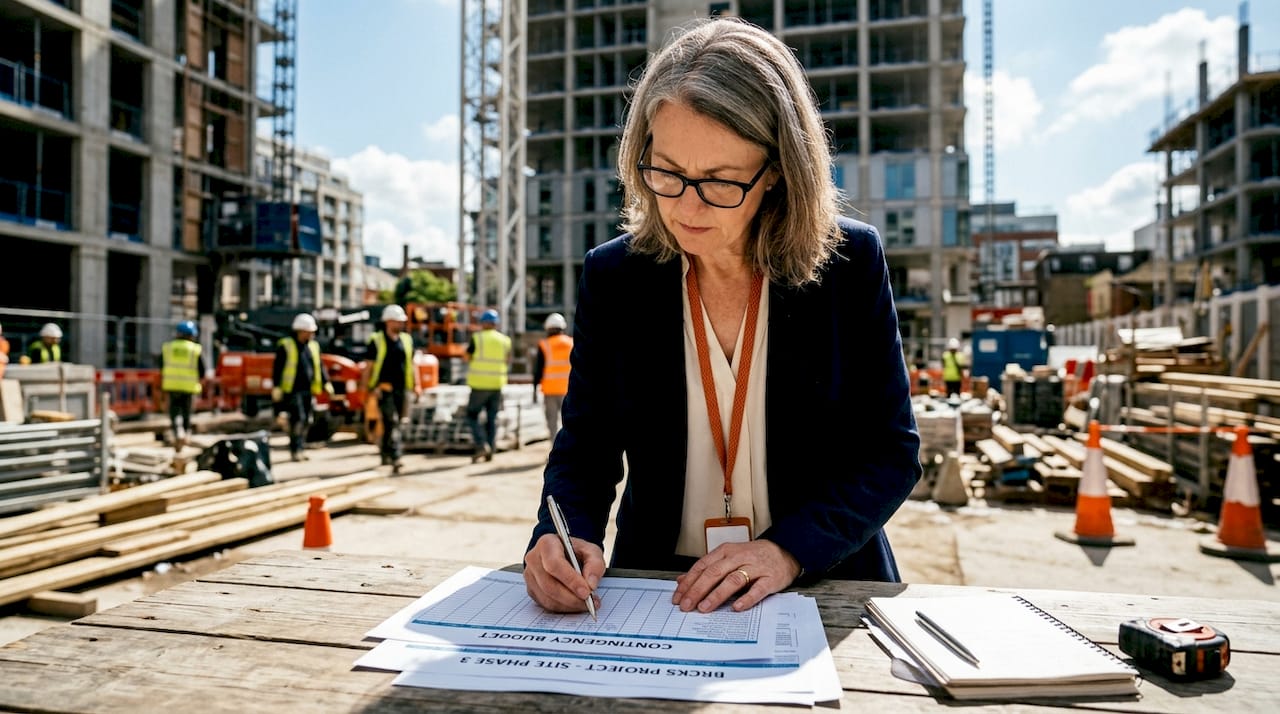
A construction contingency is a designated financial reserve built into a project budget to cover costs that cannot be predicted at the outset. It is not spare money or a buffer for poor planning. It is a deliberate, managed allowance that acknowledges one simple truth: no matter how thorough the preparation, construction projects encounter the unexpected.
In the UK, contingency funds typically cover:
- Unforeseen ground or site conditions discovered after work begins
- Design changes driven by evolving client requirements or regulatory updates
- Material and labour price fluctuations between tender and delivery
- Delays caused by third parties, utilities, or statutory approvals
- Errors or omissions in drawings that only surface on site
Without a properly sized reserve, a single unexpected cost can force a project into crisis. With one, the team can respond, adapt, and keep moving.
What types of construction contingency apply at each project phase?
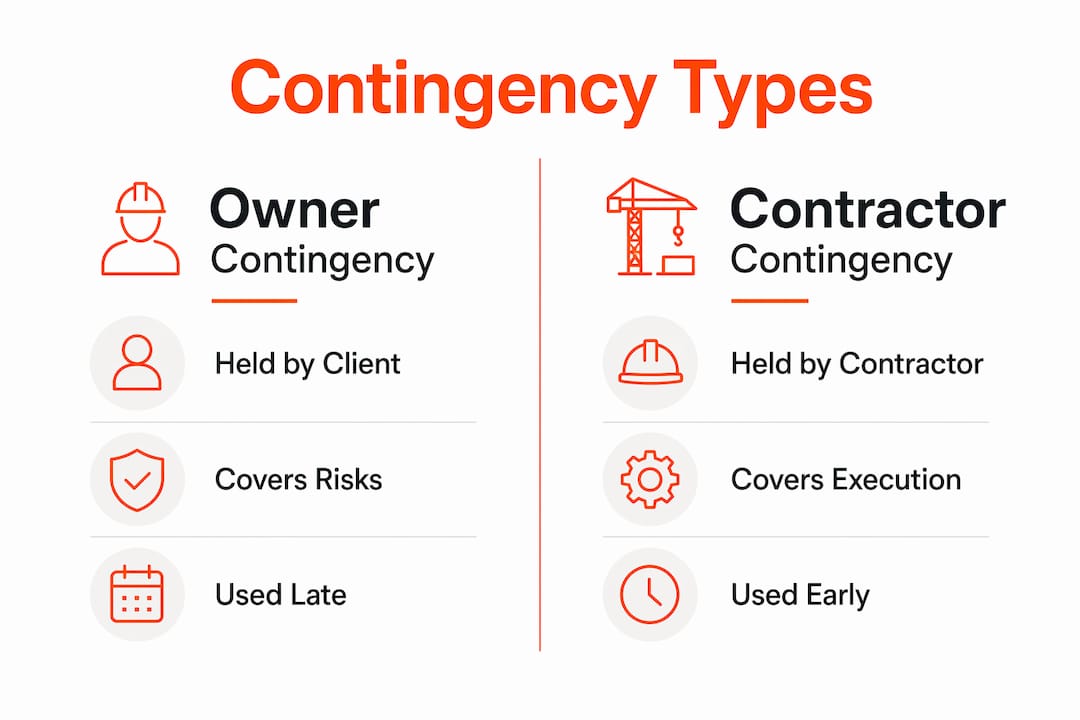
Not all contingency funds serve the same purpose. The three main types reflect who carries the risk and when.
Owner’s contingency
The client holds this reserve to cover risks that sit outside the contractor’s scope: scope changes, client-driven design evolution, third-party delays, and planning or regulatory surprises. It is typically managed by the project manager or quantity surveyor and released only when a specific, identified risk materialises.
- Covers client-initiated variations and late design decisions
- Absorbs cost impacts from planning authority conditions
- Protects against programme extensions caused by client decisions
Contractor’s contingency
Contractors price their own contingency into the tender to cover risks they accept under the contract. Under unamended JCT contracts, contractors typically bear unforeseen ground condition risks without any compensation event, which makes this reserve particularly important for groundworks-heavy schemes.
- Priced into the tender sum, not shown separately to the client
- Covers subcontractor failures, minor rework, and site-specific unknowns
- Size reflects the contractor’s risk appetite and project complexity
Design phase contingency
During early design, when information is incomplete and decisions are still being made, a design contingency covers the cost of evolving the scheme. As the design matures and drawings are issued for construction, this allowance reduces progressively.

Pro Tip: Review and formally reduce your design contingency at each RIBA stage gate. Carrying a high design allowance into the construction phase creates confusion about what the reserve is actually for.
How do you calculate and manage a contingency budget?
The right contingency percentage depends on how much you know at the time of budgeting. Cost planning guidance is consistent on this: higher allowances early, lower allowances as design matures.

| Design stage | Typical contingency range | Key driver |
|---|---|---|
| Concept / feasibility | 10–15% | Minimal site data, evolving brief |
| Scheme design | 5–10% | Outline design agreed, some surveys done |
| Detailed design | 2.5–3% | Most information available |
| Pre-tender | 2–2.5% | Drawings near complete, risks largely known |
These contingency percentages are applied to the total build cost, not the project budget as a whole. A £2m residential scheme at concept stage might carry £200,000–£300,000 in contingency. By pre-tender, that same project could reasonably hold £50,000–£60,000.
Factors that push the percentage higher include:
- Poor or limited ground investigation data
- Listed buildings or complex heritage constraints
- High market volatility in materials or specialist labour
- Phased or occupied-site construction
Managing the reserve is as important as sizing it correctly. A well-managed contingency is tracked against a live risk register, reviewed at every project meeting, and adjusted as risks resolve or new ones emerge. When a risk is closed out, release the unused allowance formally. When a new risk appears, assess its probability and cost impact before drawing on the reserve. Linking every drawdown to a specific risk entry keeps the budget transparent and defensible. UK projects that go over budget often do so because contingency was absorbed gradually into general spend, with no audit trail. Keeping it as a separate line item, visible to the client and the team, prevents that drift. For more on why UK projects overspend, the analysis of UK residential cost overruns is worth reading alongside this guide.
How does contingency differ from retainage?
Contingency and retainage are both financial controls, but they serve entirely different purposes and are often confused.
A contingency is a budget reserve held by the client or contractor to cover unknown future costs. Retainage, by contrast, is a contractually withheld portion of each payment due to the contractor, held back to incentivise completion and protect against defects.
| Feature | Contingency | Retainage |
|---|---|---|
| Who holds it | Client or contractor | Client |
| Purpose | Cover unforeseen costs | Incentivise completion and quality |
| When released | As risks materialise | On practical completion and defects liability |
| Contractual basis | Budget planning tool | Contractual payment term |
Key distinctions to keep in mind:
- Contingency is a proactive planning tool; retainage is a reactive payment mechanism
- Contingency can be released early if risks resolve; retainage follows a fixed contractual schedule
- Confusing the two distorts cash flow forecasting and can expose either party to unplanned shortfalls
Both affect project cash flow, but in different ways. Retainage reduces the contractor’s working capital throughout the build. Contingency, if drawn down heavily, reduces the client’s financial headroom for the remainder of the project.
What UK experts say about contingency planning and contracts in 2026
The shift in how UK professionals approach contingency is clear. Flat percentage allowances are giving way to risk-register linked reserves that tie every pound of contingency to a specific, documented risk. This approach improves transparency and builds client trust, because the client can see exactly what the money is for and when it has been used.
A contingency is not a slush fund. It is a planned financial cushion, calibrated to design maturity and project complexity. Vague allowances lead to mistrust and misuse. A well-documented risk register with defined probabilities and cost impacts is the only defensible basis for contingency management. When risks are tracked and contingency drawdowns are justified against specific entries, clients and contractors can have an honest conversation about budget at every stage.
The choice of contract form has a direct bearing on how contingency is structured. JCT and NEC contracts allocate risk differently. NEC 4 uses early warning notices and compensation events to share unforeseen risks collaboratively, which can reduce the contractor’s need for a large private contingency. JCT Design and Build 2016 takes a more rigid approach, with contractors absorbing a wider range of site risks, which tends to increase contractor contingency.
Practitioners also flag the importance of distinguishing contingency from provisional sums. Confusing the two can create budget gaps or double counting during contract execution. A provisional sum covers a defined but unquantified item of work; a contingency covers genuinely unknown risks. Treating them as interchangeable is a common source of disputes.
On UK public sector and framework projects, the trend is towards fully documented contingency governance, with drawdown approvals required from the client’s project board. Private sector clients are increasingly asking for the same level of visibility.
Pro Tip: Use a site diary app to log every site event that could trigger a contingency drawdown in real time. When the record exists from day one, justifying the spend to the client is straightforward rather than retrospective.
Key takeaways
A construction contingency is a planned financial reserve, sized by design stage and risk profile, and managed transparently against a live risk register throughout the project lifecycle.
| Point | Details |
|---|---|
| Size by stage | Contingency decreases as design certainty increases, starting higher early in the project and reducing toward tender |
| Link to risk register | Every drawdown should reference a specific risk entry to keep the budget transparent and defensible. |
| Contract form matters | JCT and NEC contracts allocate site risks differently, directly affecting how much contingency each party needs. |
| Contingency vs retainage | Contingency covers unknown future costs; retainage is a contractual payment hold to incentivise completion. |
| Active management | Review and adjust the reserve at every project stage; unused allowances should be formally released, not absorbed. |
FAQ
What is a good construction contingency percentage?
Typical UK contingencies vary by project stage and complexity, typically 10–15% at concept/feasibility, 5–10% at scheme design, around 2.5–3% at detailed design stage, and 2–2.5% at pre-tender, depending on risk and project type.
What does a 5% contingency mean in practice?
Typical contingency percentages vary around 2.5-3% at detailed design stages, reflecting reduced risk as most information is available. This results in a contingency reserve that is lower than early design stages.
How do you calculate construction contingency?
Apply a percentage to the total build cost based on the current design stage and risk profile. Link each allowance to specific risks in a register, and reduce the percentage as design information improves.
How is contingency different from a provisional sum?
A provisional sum covers a defined but unquantified item of work included in the contract. A contingency covers genuinely unknown risks that may or may not materialise. Confusing the two can cause budget gaps or double counting during contract execution.
Recommended
- UK Construction Project Coordination Best Practices 2026 | BRCKS
- Best Construction Apps UK: 2026 Guide for Builders
- Construction Team Onboarding Checklist: 2026 UK Guide
- BRCKS | Construction Project Communication Software
How BRCKS Can Help
Managing construction contingency effectively is the difference between a project staying on track or spiralling out of budget. BRCKS simplifies this complex process by providing real-time visibility into your financial buffers, ensuring every pound is accounted for as your build progresses. By centralising your cost management, our platform helps you mitigate risks and make informed decisions before small overruns become major issues. We invite you to explore how BRCKS can bring greater precision and confidence to your next project’s bottom line. Learn more at BRCKS and explore our full feature set.