Information Sharing Cuts Construction Errors 70% in UK Projects
Learn how centralised information sharing can eliminate up to 70% of coordination failures and save hours daily for UK residential construction managers.
By James Shorter ·
Information Sharing Cuts Construction Errors 70% in UK Projects
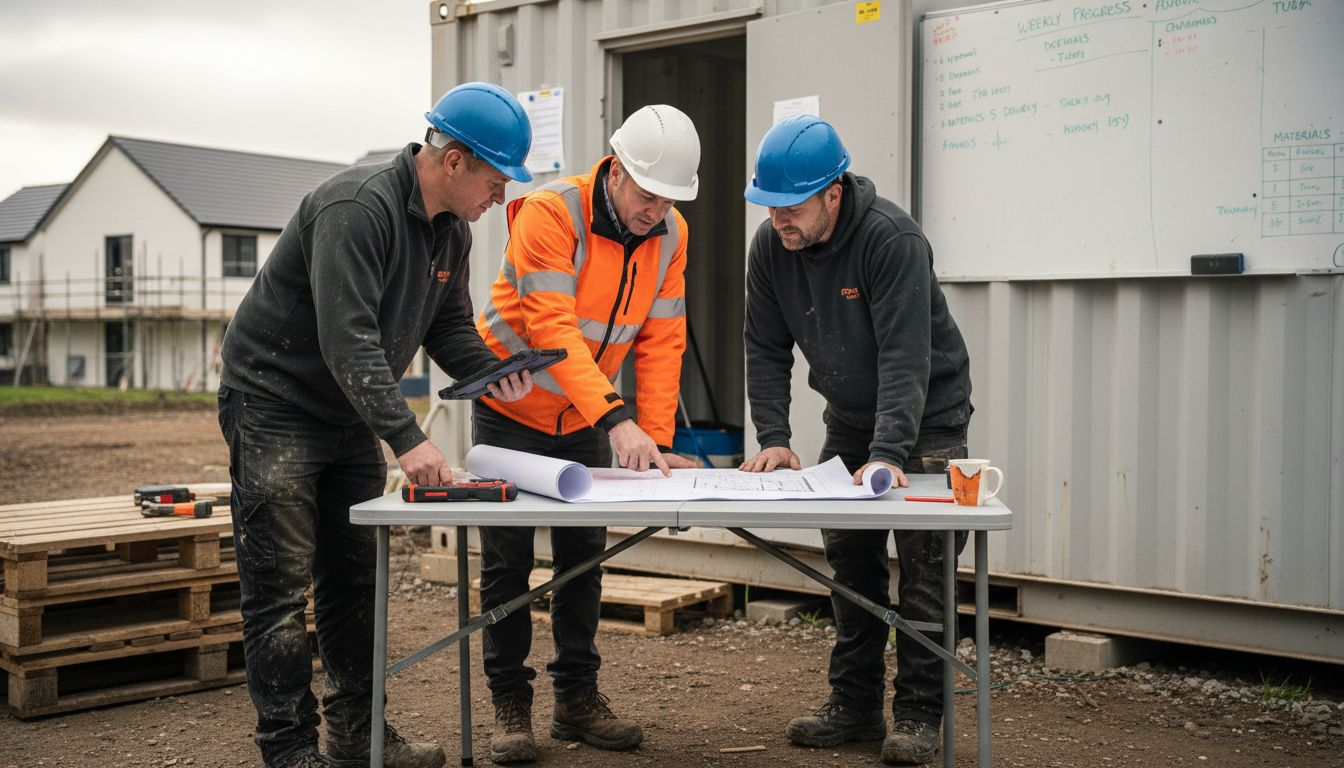
Poor communication causes 56% of delays in construction projects across the UK. For residential construction managers juggling WhatsApp groups, email threads, and phone calls, this fragmentation creates costly errors and missed deadlines. You’re not alone if vital site updates vanish in digital chaos. This guide reveals how centralised information sharing eliminates up to 70% of coordination failures, saving hours daily while improving safety and delivery outcomes.
Table of Contents
Challenges Of Fragmented Communication In Residential Construction Projects
How Effective Information Sharing Improves Project Efficiency And Safety
Technology Solutions To Centralise And Streamline Communication
Implementing Better Information Sharing Practices: Practical Steps
Frequently Asked Questions About Information Sharing In Construction
Key Takeaways
PointDetailsCentralised platforms reduce missed information by 70%Digital tools eliminate fragmented channels, cutting coordination failures dramaticallyFragmented communication increases rework and delaysMultiple uncoordinated channels cause duplication, errors, and project overrunsEffective sharing improves safety and complianceReal-time updates enhance incident prevention and regulatory adherenceDigital tools streamline workflows and boost coordinationUnified platforms save over two hours daily through integrated task managementMisconceptions about multiple channels hinder successMore channels create cognitive overload, not better awareness
Understanding Information Sharing in Construction
Information sharing in residential construction means the timely, accurate exchange of project data among all stakeholders. This includes site updates, design changes, safety alerts, and task assignments flowing between project managers, site teams, subcontractors, and suppliers. When done well, everyone accesses the same current information, reducing confusion and enabling coordinated action.
For small to medium UK residential builders, effective information sharing defined as centralised, timely exchange among key construction stakeholders improves project outcomes. The challenge lies not in recognising its importance but in achieving it consistently across mobile site workers, office staff, and external partners.
Key stakeholders requiring seamless information flow include:
Project managers coordinating schedules and resources
Site supervisors directing daily activities and safety protocols
Subcontractors executing specialised work packages
Suppliers delivering materials on tight schedules
Office administrators handling documentation and compliance
Without structured systems, critical updates get buried in email inboxes or lost in endless WhatsApp threads. The result? Duplicate work, safety incidents, and clients questioning your professionalism. Understanding this foundation prepares you to tackle the fragmentation plaguing most residential projects.
Challenges of Fragmented Communication in Residential Construction Projects
Most UK construction teams juggle five or more communication channels simultaneously. You’ve experienced it: urgent site changes texted on WhatsApp, formal requests sent via email, quick queries made through phone calls, and critical specs scribbled on paper notes. This scattered approach feels manageable until it creates chaos.
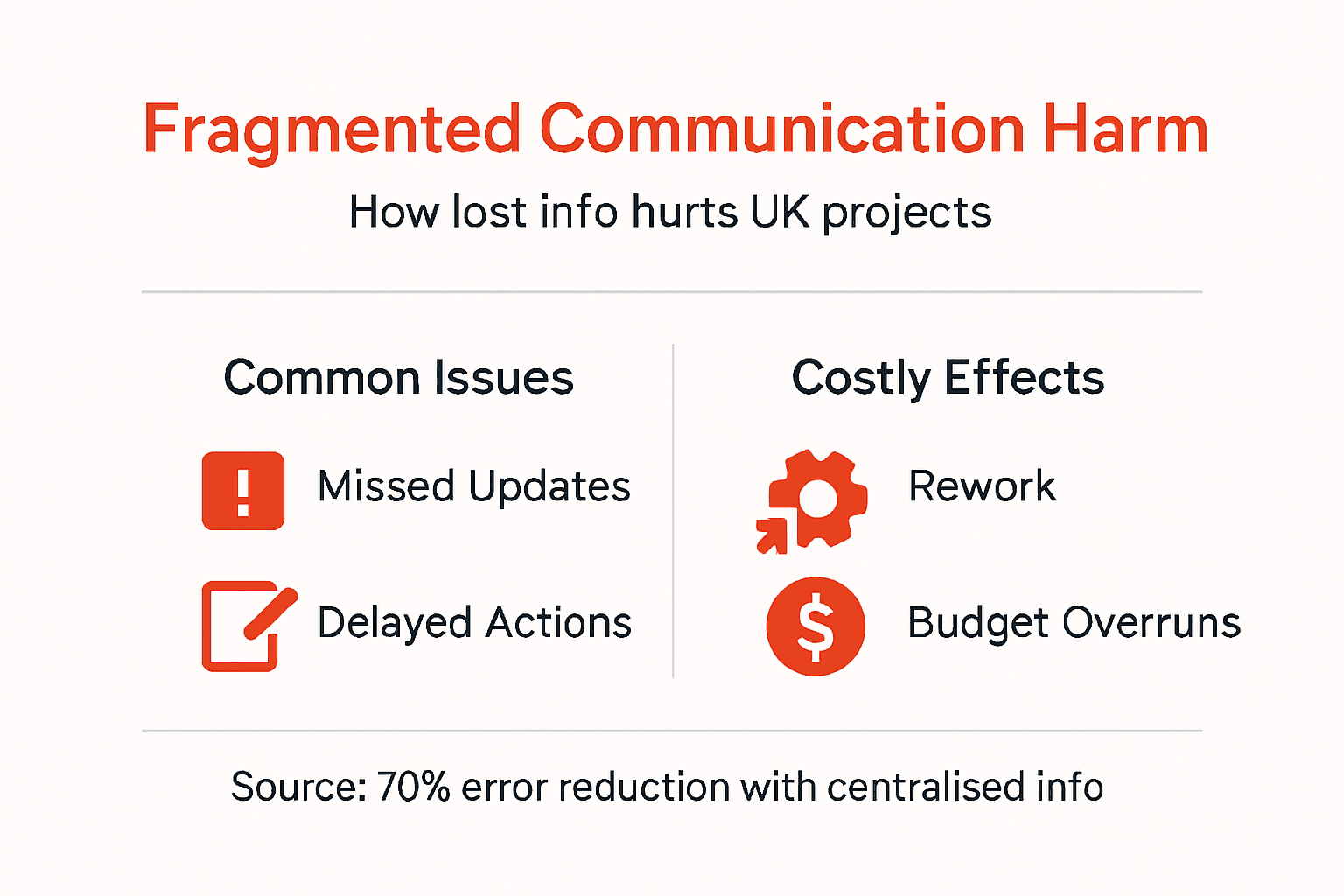
Fragmented communication channels significantly increase message duplication, missed information, and coordination failures in construction. Research shows teams using multiple uncoordinated platforms miss up to 40% of important updates. That’s nearly half your communication failing to reach the right people at the right time.
Common problems facing small to medium residential builders include:
Message duplication and confusion: The same update gets shared across three platforms, each version slightly different, leaving teams unsure which instruction to follow.
Lost information in chat histories: Critical specs or client requests vanish in endless WhatsApp threads, impossible to retrieve when needed.
Delayed responses and decision bottlenecks: Questions sent via email sit unanswered for days while urgent site work waits.
Cognitive overload on managers: Checking five apps constantly drains mental energy better spent solving actual construction problems.
Version control nightmares: Teams work from outdated drawings because the latest revision lives in someone’s inbox.
“The biggest waste of time in construction isn’t the work itself, it’s hunting for information that should be instantly accessible.”
For UK residential projects operating on tight margins, these failures translate directly into cost overruns, extended schedules, and frustrated clients. The informal tools that seemed efficient for small jobs become liabilities as your business grows.
How Effective Information Sharing Improves Project Efficiency and Safety
Centralised information sharing transforms construction coordination by creating a single source of truth. When everyone accesses the same real-time updates, confusion evaporates. Teams make faster decisions, reduce rework, and catch potential issues before they become expensive problems.

Digital centralised platforms reduce message duplication and missed information by 70%, directly cutting errors and improving coordination. This isn’t theoretical. Residential builders using centralised construction communication platforms report measurable improvements in project delivery timelines and safety compliance.
The mechanisms driving these improvements include:
Unified project feeds: All updates, documents, and conversations live in one place, searchable and organised by project
Real-time notifications: Team members receive instant alerts for changes affecting their work, eliminating delays
Clear accountability trails: Every message, decision, and task assignment gets timestamped and attributed, reducing disputes
Integrated task management: Updates automatically link to relevant tasks and checklists, ensuring nothing falls through cracks
Safety benefits prove equally significant. Centralised platforms make it simple to log incidents, share hazard alerts, and verify that all site workers received critical safety briefings. When health and safety compliance requires documented proof of communication, fragmented WhatsApp threads and deleted emails create serious liability risks.
Pro Tip: Start each week by reviewing your platform’s activity log to spot communication patterns. If certain team members consistently miss updates, adjust your notification settings or provide additional training rather than assuming they’re ignoring messages.
Technology Solutions to Centralise and Streamline Communication
Traditional communication methods struggle with construction’s unique demands. Email lacks the immediacy site work requires. WhatsApp groups become chaotic with hundreds of unorganised messages. Phone calls leave no documentation trail. These tools weren’t designed for coordinating complex residential projects with mobile teams and tight deadlines.
Modern unified platforms purpose-built for construction solve these limitations. Centralised digital platforms outperform traditional email and messaging groups by reducing message duplication and missed information by 70%. They combine chat, file sharing, task management, and meeting coordination into one interface optimised for both site and office use.
FeatureTraditional MethodsCentralised PlatformsInformation locationScattered across email, WhatsApp, calls, paperSingle organised hub with search functionalityMobile accessibilityLimited, requires switching between appsDedicated mobile apps with offline accessTask integrationManual tracking in separate systemsAutomatic task creation and assignment from messagesFile managementAttachments buried in threadsCentralised document library with version controlMeeting coordinationSeparate calendar apps and video toolsIntegrated scheduling with AI-generated action itemsCommunication audit trailDifficult to reconstruct, often incompleteComplete timestamped history for compliance
Key features to prioritise when selecting construction software for builders include:
Intuitive interface requiring minimal training: Your site teams shouldn’t need IT degrees to send updates
Robust mobile applications: Most construction communication happens on phones, not desktops
Flexible notification controls: Prevent alert fatigue while ensuring critical updates reach the right people
Quick setup and deployment: Platforms requiring weeks of configuration never get properly implemented
When comparing options, examine how tools handle the specific workflows residential construction demands. A detailed comparison of WhatsApp and BRCKS reveals how purpose-built platforms address construction’s unique coordination challenges.
Pro Tip: Before committing to any platform, run a two-week trial on one active project. Track time saved and errors prevented to calculate actual ROI, making the business case for company-wide adoption straightforward.
Common Misconceptions About Communication in Construction
Many construction managers believe adding more communication channels improves information flow. The logic seems sound: if teams miss messages on WhatsApp, also send emails and make phone calls. In reality, this multiplies confusion rather than solving it.
Myth: More channels equal better awareness and fewer missed updates.
Reality: Multiple uncoordinated channels create cognitive overload. Team members waste time checking five different platforms, never certain where important information might appear. Studies confirm that beyond two primary channels, message retention actually decreases as people develop notification fatigue and start ignoring alerts.
Myth: Informal tools like WhatsApp suffice for professional construction coordination.
Reality: Consumer messaging apps lack features construction requires. You can’t easily search months of chat history for specific specs. You can’t assign tasks with clear deadlines and accountability. You can’t generate compliance reports proving all workers received safety briefings. Informal tools work for casual conversation, not professional project management.
Myth: Implementing communication software alone solves coordination problems.
Reality: Technology enables better practices but doesn’t automatically create them. You must establish clear protocols: which updates belong in the platform, expected response times, and consequences for bypassing the system. Without process changes and training, teams revert to old fragmented habits regardless of available tools.
Understanding these misconceptions prevents wasted investment in solutions that don’t address rootcauses. Effective communication improvement requires both appropriate technology and deliberate workflow adaptation.
Implementing Better Information Sharing Practices: Practical Steps
Transforming your team’s communication starts with honest assessment. Map your current information flows to identify where fragmentation causes the most pain. Talk to site supervisors, subcontractors, and office staff about which updates they consistently miss and which channels they find most reliable.
Follow this structured implementation approach:
Audit current communication channels and pain points: Document every platform your team uses, which information travels through each, and where failures occur most frequently.
Select a centralised platform suited for UK residential construction: Prioritise ease of use, mobile functionality, and setup speed to minimise disruption.
Define clear communication protocols: Establish which updates require platform posting, expected response timeframes, and guidelines for urgent versus routine messages.
Train all team members on new tools and processes: Conduct hands-on sessions showing exactly how to post updates, assign tasks, and find information quickly.
Migrate gradually starting with one project: Test your new system on a single active job before company-wide rollout, gathering feedback and refining protocols.
Monitor adoption and gather feedback weekly: Track platform usage metrics and ask teams what’s working and what needs adjustment.
Establish consequences for bypassing the system: Make clear that critical updates shared only via unofficial channels won’t be considered properly communicated.
The transition period typically spans four to six weeks. Early adopters among your team will champion the change, helping reluctant colleagues adapt. Focus on quick wins: highlight instances where the platform prevented errors or saved significant time.
Pro Tip: Implement centralised communication tools during a project’s planning phase rather than mid-construction. Starting fresh with new protocols on a new job reduces resistance and establishes good habits from day one.
Summary and Next Steps for Construction Managers
Fragmented communication costs UK residential construction teams hours daily and causes preventable errors that damage your reputation and margins. Centralised information sharing delivers measurable benefits: 70% fewer coordination failures, improved safety compliance, and over two hours saved per team member each day.
The path forward requires both technology adoption and process improvement. Modern platforms purpose-built for construction eliminate the chaos of juggling WhatsApp, email, and phone calls. But tools alone won’t fix poor communication habits. You must establish clear protocols, train your teams thoroughly, and hold everyone accountable for using the system consistently.
Start by assessing your current fragmentation honestly. Identify your biggest communication pain points. Then trial a centralised platform like BRCKS on one project to demonstrate tangible improvements. Measure time saved, errors prevented, and team satisfaction to build momentum for wider adoption.
Your competition faces the same coordination challenges. Those who solve them first gain significant advantages in project delivery, client satisfaction, and team retention. The question isn’t whether to improve your information sharing, but how quickly you’ll implement the changes that separate leading builders from struggling ones.
Explore BRCKS: Your Construction Communication Solution
If fragmented communication is costing your residential construction business time and money, BRCKS offers a tailored solution. Our platform centralises all project information in one organised space, replacing the chaos of WhatsApp groups, email threads, and scattered files.
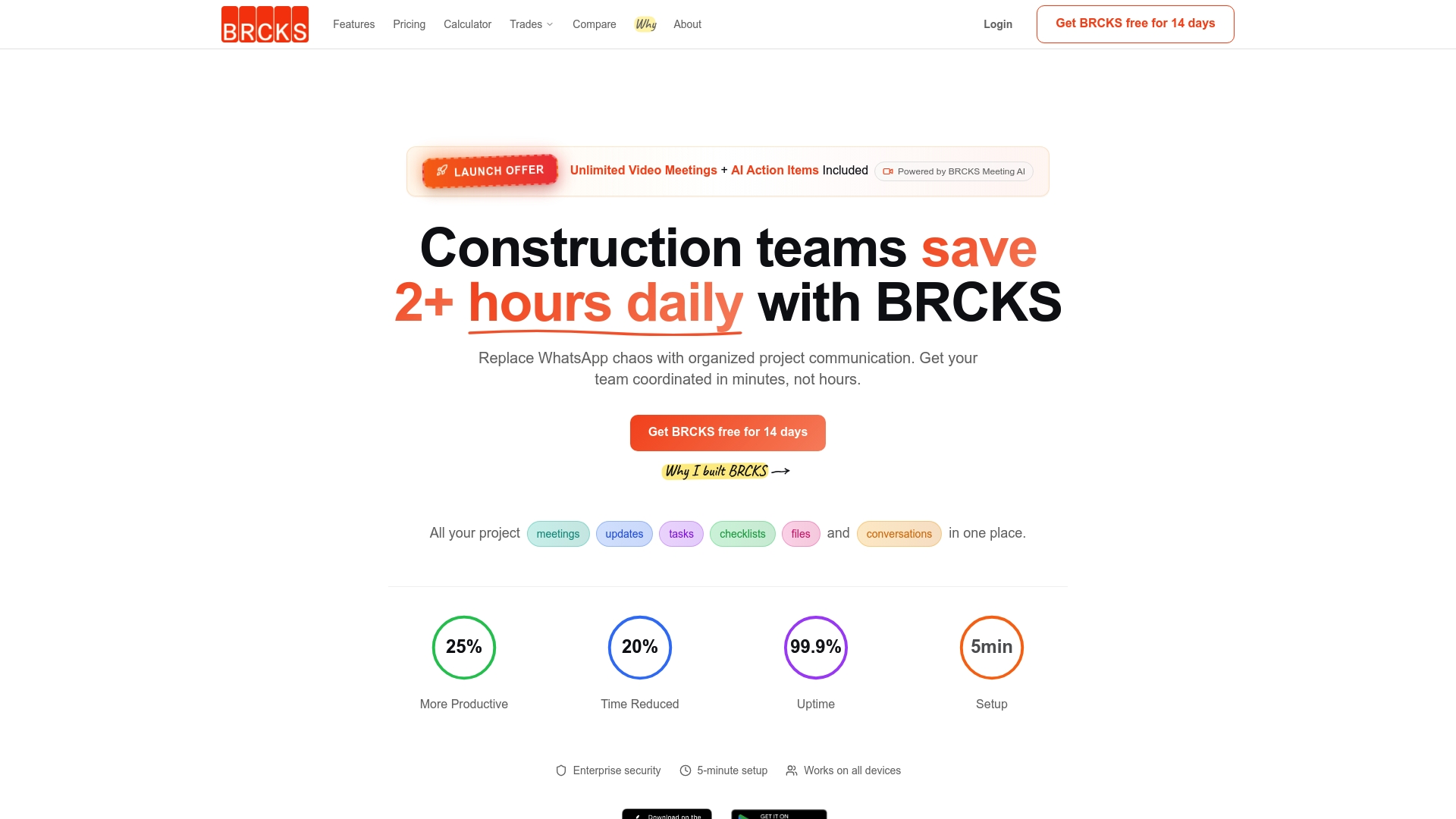
Designed specifically for small to medium UK residential builders, BRCKS provides unlimited video meetings with AI-generated action items, a unified project feed, and dedicated mobile apps for seamless site-to-office coordination. Setup takes just five minutes, and our 14-day free trial lets you prove the value before committing.
Explore how construction software for builders transforms daily workflows, or compare BRCKS with WhatsApp to see why purpose-built platforms outperform consumer messaging apps. Join UK construction teams already saving over two hours daily through better communication. Visit BRCKS to start your free trial and experience centralised coordination that actually works.
Frequently Asked Questions About Information Sharing in Construction
What are the fastest ways to reduce communication errors on site?
Implement a single centralised platform for all project updates, eliminating fragmented channels. Establish clear protocols defining which information gets shared where, and train teams to search the platform before asking repeat questions. Quick wins come from centralising daily site updates and task assignments first.
How can small teams adopt centralised info sharing without disruption?
Start with one project rather than company-wide rollout. Choose platforms with five-minute setup times and intuitive interfaces requiring minimal training. Run parallel systems briefly, posting key updates to both old and new channels during the two-week transition, then commit fully to the new platform.
What features should I look for in construction communication software?
Prioritise robust mobile apps since most construction communication happens on phones. Ensure quick search functionality, integrated task management, and simple file sharing with version control. The platform should handle both real-time chat and organised project feeds, with flexible notification settings preventing alert fatigue.
How do I measure if new communication tools improve project outcomes?
Track time spent searching for information before and after implementation. Monitor rework rates and change order frequency as indicators of coordination quality. Survey team satisfaction with communication clarity, and measure project delivery timelines against historical averages. Most teams using construction communication platforms see measurable improvements within four weeks.
Can centralised platforms really replace WhatsApp for construction teams?
Yes, when they’re purpose-built for construction workflows. Unlike consumer messaging apps, professional platforms organise conversations by project, integrate tasks and files, provide searchable history, and generate compliance documentation. Teams initially resistant to change quickly appreciate having all project information accessible in one place rather than buried in endless chat threads.
What’s the biggest mistake teams make when implementing new communication tools?
Failing to establish clear usage protocols and accountability. Technology alone doesn’t fix poor habits. You must define which updates require platform posting, set response time expectations, and consistently redirect team members who bypass the system. Without process changes and leadership commitment, teams revert to familiar fragmented methods regardless of available tools.
Recommended
How BRCKS Can Help
By prioritising transparent communication and real-time data exchange, UK firms can significantly reduce costly mistakes and keep projects on track. BRCKS provides the essential digital infrastructure to facilitate this level of collaboration, ensuring that every stakeholder has access to the most accurate information at the right time. Eliminating silos not only improves site safety but also protects your bottom line from the impact of avoidable rework. We invite you to discover how BRCKS can streamline your project management and help your team achieve greater precision on every build. Learn more at BRCKS.