Project update communication tips for UK construction
Discover how structured communication rhythms and centralised digital platforms enhance audit trails and stakeholder engagement in UK construction projects.
By James Shorter ·
Project update communication tips for UK construction

TL;DR:
- Regular, scheduled project updates build trust, reduce delays, and improve decision-making in UK construction. Using centralised digital platforms with clear communication roles enhances audit trails and stakeholder engagement. Consistent discipline in meetings, reports, and stakeholder tailored messaging prevents project slippages and fosters trust.
Effective project update communication is defined as the structured, scheduled exchange of progress information between project teams, subcontractors, clients, and regulatory bodies to keep a construction project on programme and within budget. For UK construction professionals, poor communication is not a minor inconvenience. Missed decisions, undocumented changes, and informal message threads cause real delays and real costs. The project update communication tips in this article are built specifically for site conditions in the UK, where local authority inspection requirements, subcontractor chains, and client expectations all demand a disciplined approach to how, when, and to whom you communicate.
1. Project update communication tips: set a fixed decision rhythm
The single most effective change you can make to your communication process is fixing a predictable decision rhythm. Reactive communication builds far less trust than a consistent fortnightly or weekly update cycle. When your team knows exactly when decisions will be made and communicated, they stop chasing and start preparing.
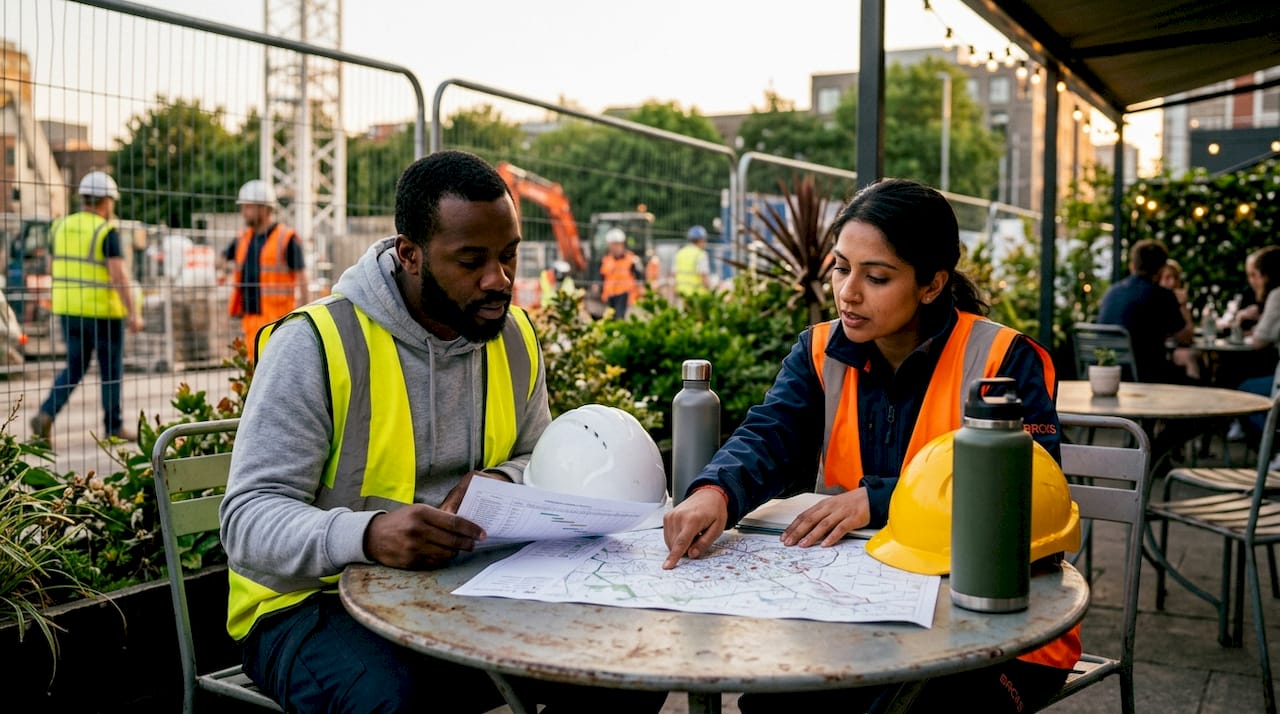
A decision lookahead schedule covering 2–4 weeks ahead of the current programme is the standard tool for this. It lists every decision required, who owns it, and when it must be confirmed. Without this, approvals hang in inboxes and trades stand idle waiting for answers that should have arrived days earlier.
| Meeting type | Recommended duration | Primary benefit |
|---|---|---|
| Residential weekly site meeting | 30–60 minutes | Keeps trades aligned, prevents missed sign-offs |
| Commercial progress meeting | 45–90 minutes | Covers programme, variations, and RFIs |
| Client update call | 20–30 minutes | Maintains trust and manages expectations |
| Subcontractor coordination | 30–45 minutes | Surfaces clashes and resource conflicts early |
Pro Tip: Set a firm expiry on every decision request. If a client or designer has not responded within five working days, escalate it formally in writing. Requests without deadlines are routinely ignored, and the delay becomes your problem on site.
2. Build inspection notice requirements into your update schedule
UK local authorities require 24–48 hours notice for site inspections, with some busy areas requesting up to three working days. Missing an inspection window does not just cause a one-day delay. It can push your programme back by weeks if the inspector cannot return promptly.
The fix is straightforward. Add statutory inspection milestones to your weekly update agenda as standing items. Assign one person to own the notification process and confirm it in writing every time. This turns a common source of slippage into a managed, documented step.
3. Replace informal channels with a centralised digital platform
WhatsApp is the default communication tool on most UK construction sites. It is fast, familiar, and completely unsuitable for formal project decisions. Shifting from WhatsApp to centralised platforms is essential for maintaining audit trails and clear decision tracking. When a dispute arises, a WhatsApp thread is not a reliable record. A centralised platform that links photos, tasks, and drawings to a single source of truth is.
Digital platforms in construction improve governance measurably by reducing RFI turnaround times, cutting rework rates, and removing manual admin effort. Those are not abstract benefits. Faster RFI responses mean trades are not waiting for answers. Lower rework rates mean your margin stays intact.
The core features to look for in a digital communication platform include:
- Real-time progress updates visible to all relevant parties
- Document control with version history and access logs
- Task assignment with named owners and due dates
- RFI tracking with response timestamps
- Variation logs that capture scope changes before they become disputes
- Client portals that give stakeholders visibility without flooding your team with calls
Pro Tip: Appoint a site champion before you roll out any new platform. One person who knows the tool well and can answer questions on site makes adoption happen. Training sessions alone rarely stick without a go-to person on the ground.
4. Tailor your communication to each stakeholder group
Treating all stakeholders identically is one of the most common mistakes in project communication. A site operative needs to know what they are doing tomorrow and who to report a problem to. A client needs confidence that the project is on track and that their money is being spent correctly. A building control officer needs documented evidence that statutory requirements are being met. These are three completely different communication needs, and one update format cannot serve all three.
Audience segmentation means identifying what each stakeholder group needs to know, how often they need it, and through which channel. The failure to document this early in a project increases rework risk and erodes trust when expectations are not met.
Effective channels by audience type:
- Onsite operatives: Daily briefings, toolbox talks, and WhatsApp for immediate coordination (with formal records kept elsewhere)
- Subcontractors: Weekly programme updates, variation notices in writing, and RFI responses via a tracked platform
- Clients: Fortnightly written reports, client portal access, and a named point of contact for queries
- Regulatory bodies and inspectors: Formal written notices, documented inspection records, and confirmation emails
Pro Tip: Create a one-page stakeholder communication map at project start. List each group, their preferred channel, the update frequency, and who on your team is responsible. Review it at the four-week mark and adjust. This single document prevents more disputes than most contracts.
5. Structure your weekly meetings and reports for maximum impact
A weekly site meeting without a fixed agenda is a conversation, not a management tool. Weekly construction reports are most effective when treated as strategic risk management documents, not administrative summaries. The difference is a section labelled “decisions required” with named owners and firm deadlines.
Every weekly meeting should cover five standing items: progress against programme, upcoming decisions and their deadlines, active variations, compliance and inspection status, and any resource or access issues. Anything outside those five items is either an emergency or a distraction. Keep the meeting to 30–60 minutes and distribute written notes within 24 hours.
Dos and don’ts for meetings and reports:
- Do circulate an agenda at least 24 hours before the meeting
- Do assign every action point to a named individual with a deadline
- Do write reports in plain English that a client can read without a construction background
- Do include a “decisions required by” column in every report
- Don’t allow meetings to run beyond their scheduled time without agreement
- Don’t send a report without confirming receipt from key stakeholders
- Don’t document decisions verbally only. Put them in writing every time
For effective construction meetings, the written record is as important as the conversation itself. A decision made in a room and not documented is a decision that will be disputed later.
6. Adapt your communication cadence to project complexity
Not every project needs the same update frequency. A large commercial fit-out with multiple subcontractor packages and a live client programme needs daily coordination and weekly formal reporting. A small residential extension with one main contractor and a straightforward scope can run well on fortnightly updates and a single weekly call.
A consistent communication rhythm prevents silos and surfaces safety concerns early. That principle applies regardless of project size. The frequency changes; the discipline does not.
When communication breaks down, the recovery steps are:
- Reinstate a fixed weekly meeting immediately, even if it is brief
- Send a written reset note to all stakeholders confirming the new communication structure
- Audit what was missed and document it before moving forward
- Assign a single point of contact for each stakeholder group to reduce confusion
- Review the communication plan at the next programme milestone
Transparent, proactive updates maintain trust even when the news is not good. Clients and subcontractors can manage bad news. What they cannot manage is silence. For practical steps on reducing site miscommunication, a structured reset process is far more effective than hoping the problem resolves itself.
7. Use KPIs to measure whether your communication is working
Communication quality is measurable. RFI response time, the number of variations raised after work is complete, rework incidents per month, and the percentage of decisions made on time are all indicators of how well your project update strategies are functioning. If your RFI turnaround is running at more than five working days, your communication process has a bottleneck. If variations are being raised after the work is done, your change control communication has failed.
Track these metrics in your weekly report. Share them with your team. When the numbers improve, the team sees the direct result of better communication discipline. That visibility is what turns a process into a culture. For teams looking to build this into their workflow, construction KPI tracking is a practical starting point.
Construction SEO and marketing specialists at note that project communication quality also affects how clients talk about your business publicly. Firms with structured update processes consistently receive stronger referrals and reviews. That is a commercial argument for communication discipline that goes beyond the project itself.
Key takeaways
Effective project update communication in UK construction requires a fixed rhythm, documented decisions, and communication tailored to each stakeholder group.
| Point | Details |
|---|---|
| Fix a decision rhythm | Weekly or fortnightly update cycles build more trust than reactive messaging. |
| Build in inspection notices | Factor UK local authority notice periods of 24–48 hours into your programme schedule. |
| Move beyond WhatsApp | Centralised platforms provide the audit trails and decision tracking that informal apps cannot. |
| Tailor by stakeholder | Clients, subcontractors, and inspectors each need different information, frequency, and channels. |
| Make reports strategic | Include a “decisions required” section with named owners and firm deadlines in every weekly report. |
What I have learned from years of watching communication fail on site
The most common pattern I see is this: a project starts well, the team is communicating, the client is happy, and then around week six or eight something slips. A decision does not get made on time, a variation is missed, and suddenly the project is two weeks behind and nobody is quite sure whose fault it is. The communication was never bad. It just was not structured enough to catch the gap before it became a problem.
The fix is almost always the same. A fixed weekly meeting with a written agenda, a report that names decisions and deadlines, and a clear map of who communicates what to whom. These are not complicated tools. They are just disciplines that most teams skip because the project feels manageable without them, right up until it does not.
Digital platforms make this easier, but only if the team actually uses them. I have seen expensive software sit unused because nobody trained the site team properly or appointed someone to champion it. The technology is not the answer on its own. The answer is a team that understands why structured communication matters and has the tools to make it happen without adding two hours of admin to their day.
The projects I have seen run well share one trait: the project manager communicates proactively, not reactively. They do not wait for a problem to send an update. They send the update on schedule, every week, whether the news is good or not. That consistency is what builds the trust that holds a project together when things get difficult.
— James
How BRCKS supports better project update communication
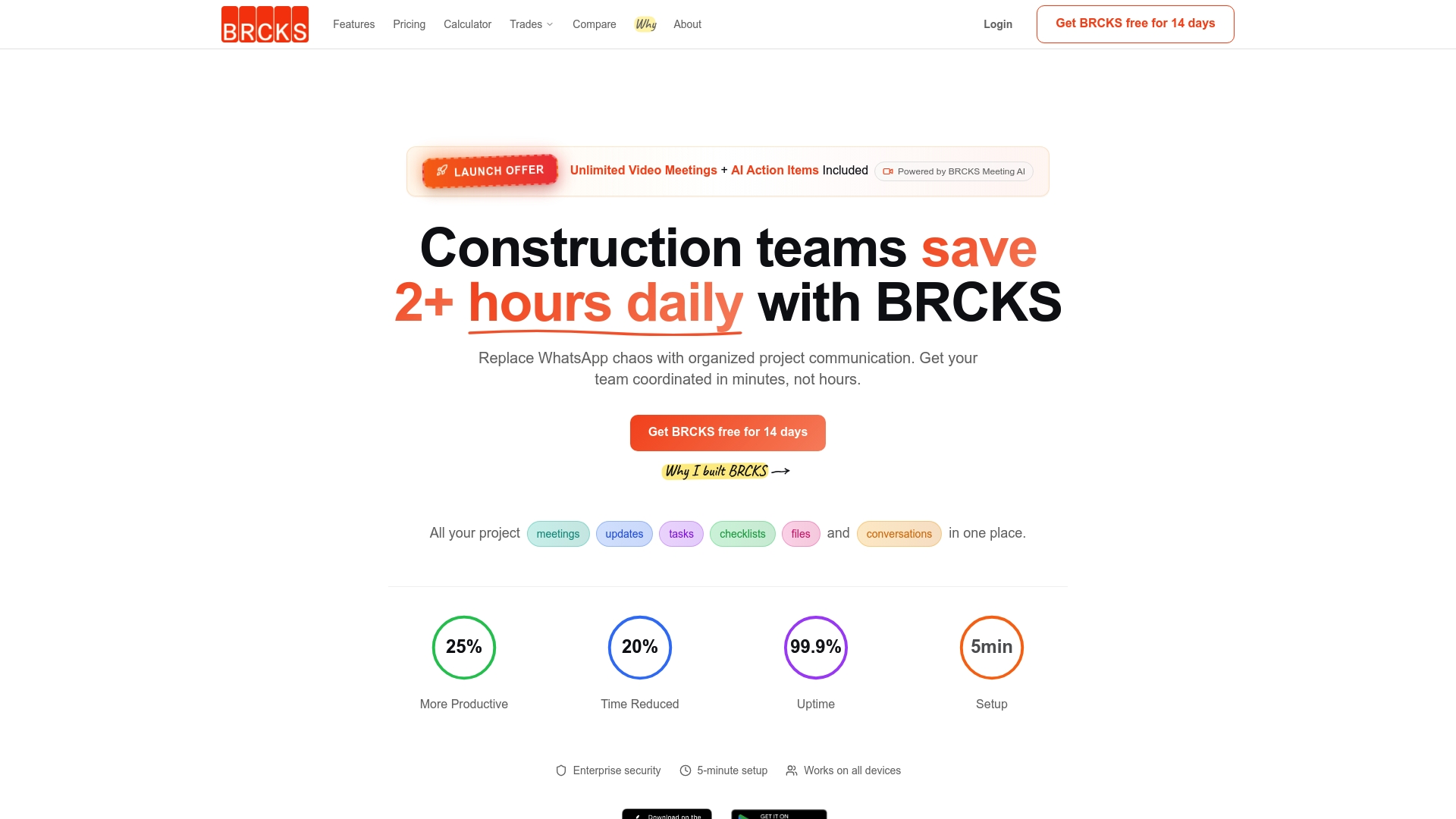
BRCKS is built for UK construction teams who need structured communication without the admin burden. The platform captures updates, decisions, and site records in real time, replacing scattered WhatsApp threads with a single, auditable source of truth. Automated site diaries, RFI tracking, and a structured variation log mean your team spends less time on paperwork and more time managing the project. BRCKS saves users over two hours of manual effort daily. Whether you work in residential building, commercial fit-out, or electrical contracting, BRCKS has a solution designed for your workflow. Construction software for builders and the BRCKS Bot are the fastest way to bring order to your project communications. Get BRCKS free for 14 days and see the difference a structured platform makes.
FAQ
What are the best project update communication tips for construction?
Set a fixed weekly or fortnightly update rhythm, document every decision in writing, and tailor your communication to each stakeholder group. Centralised digital platforms provide the audit trails that informal channels cannot.
How often should a UK construction project send progress updates?
Residential projects benefit from weekly site meetings of 30–60 minutes, while commercial projects may need daily coordination alongside weekly formal reports. The frequency should match the complexity and pace of the project.
Why is WhatsApp not suitable for formal project decisions?
WhatsApp lacks the audit trails, document control, and decision tracking required for formal project management. Moving to a centralised platform ensures all decisions are recorded, linked to drawings and photos, and accessible to the right people.
What should a weekly construction report include?
Every weekly report should cover progress against programme, upcoming decisions with named owners and deadlines, active variations, compliance status, and any resource or access issues. A “decisions required by” section is the most important element.
How do you recover from a communication breakdown on site?
Reinstate a fixed weekly meeting immediately, send a written reset note to all stakeholders, audit what was missed, and assign a single point of contact for each stakeholder group. Transparent, proactive communication rebuilds trust faster than any other approach.
Recommended
- Construction Client Communication Guide for UK Projects
- Ditch WhatsApp for Construction Project Comms | BRCKS | BRCKS
- The Hidden £13 Billion Cost: How Construction Communication Problems Are Crippling UK Projects | BRCKS
- Project Updates for UK Construction Teams | Brcks Guide
How BRCKS Can Help
Effective project communication is the backbone of any successful UK construction site, ensuring teams stay aligned and deadlines are met. By centralising your reporting and documentation, BRCKS removes the friction from manual updates and provides a single source of truth for every stakeholder. Our platform is designed to simplify these complex workflows, allowing you to focus on delivery rather than chasing paperwork. We invite you to explore how BRCKS can transform your project updates and bring greater clarity to your next build. Learn more at BRCKS and explore our full feature set.