Residential project organisation strategies for builders
Discover essential residential project organisation strategies to keep your builds on time and within budget. Improve efficiency through phased planning and subcontractor accountability.
By James Shorter ·
Residential project organisation strategies for builders
TL;DR:
- Effective residential project organisation relies on structured, phased systems that ensure projects stay on time and budget.
- Regular communication, subcontractor accountability, and strict change control practices are essential for project success.
- Discipline in daily workflows and manual systems must be established first, as software only automates proven processes.
Residential project organisation strategies are the structured, repeatable systems that keep residential builds on time, on budget, and free from costly margin erosion. The industry term for this discipline is residential construction project management, and it covers everything from lot acquisition through to final closeout. A typical residential project spans 6–18 months, involves 25–40 subcontractors, requires 8–12 inspections, and demands over 100 material selections managed simultaneously. That complexity does not manage itself. The teams that consistently deliver profitable builds do so because they have built a written, enforced system before they ever open a piece of software.

1. What are the core residential project organisation strategies?
Effective residential project organisation is built on an 11-phase framework that runs from lot acquisition to final closeout. Each phase has defined tasks, sequenced dependencies, and clear completion criteria. Without this structure, project managers react to problems rather than preventing them.
The 11 phases typically cover: lot acquisition and feasibility, design and planning, permitting, site preparation, foundations, framing, mechanical rough-ins (electrical, plumbing, HVAC), insulation and boarding, finishing trades, snagging and inspections, and final closeout. Each phase gates the next. Framing cannot begin before foundations pass inspection. Finishing trades cannot start before mechanical rough-ins are signed off.
Critical path management sits at the heart of residential construction planning. The critical path identifies which tasks, if delayed, will push the entire project completion date back. Project managers who map this path at the start can spot bottlenecks weeks before they become crises.
| Phase group | Key dependencies | Risk if skipped |
|---|---|---|
| Design and permitting | Planning approval before procurement | Procurement delays, abortive costs |
| Structural works | Inspection sign-off before next phase | Failed inspections, rework costs |
| Mechanical rough-ins | Sequenced by trade to avoid clashes | Rework, subcontractor conflicts |
| Finishing trades | Snagging completed before handover | Client disputes, retention delays |
Pro Tip: Write your phase plan as a checklist, not a Gantt chart. Checklists are faster to update on site and easier for subcontractors to follow without training.
2. How to manage subcontractors to prevent delays
Subcontractor management is the single biggest variable in residential construction planning. With 25–40 trades on a typical build, sequencing errors cause idle labour, rework, and programme slippage. The fix is a written schedule that every subcontractor signs before mobilising.
Payment tied to deliverables is the most effective accountability mechanism available to a project manager. When a subcontractor knows their invoice will not be processed until the phase inspection is passed and signed off, quality improves and timelines tighten. This is not punitive. It is simply aligning financial incentive with project outcome.
Quality inspection protocols must be embedded into the programme, not added as an afterthought. Each trade handover point should trigger a formal check before the next subcontractor mobilises. A plasterer who boards over unchecked electrical rough-ins creates a problem that costs ten times more to fix than it would have to catch at the gate.
- Confirm subcontractor start dates in writing at least two weeks in advance
- Issue a site-specific induction document covering access, welfare, and reporting lines
- Tie each payment application to a completed and signed inspection record
- Hold a brief weekly coordination call with lead trades to flag sequencing conflicts early
Pro Tip: Keep a live subcontractor schedule visible in your site office. When trades can see each other’s programmes, they self-coordinate far more effectively than when each works from their own isolated schedule.
3. Why change control is non-negotiable for margin protection
A formal change control process is the difference between a profitable build and one that bleeds money quietly until closeout. Builders without a ‘no signature, no work’ policy consistently report losses from unrecovered variation costs. The amounts are rarely dramatic per incident. They accumulate.
Every variation, whether client-requested or design-driven, must be logged, priced, and approved in writing before any work proceeds. This is not bureaucracy. It is the minimum standard for protecting your margin. A disciplined paper trail on change orders is what separates experienced residential project managers from those who end a job wondering where the profit went.
“No signature, no work” is not a negotiating position. It is a contractual boundary that protects both the builder and the client from misunderstandings that become disputes.
The practical steps for a working change control process are:
- Log every requested change in a variation register the moment it is raised, regardless of whether it seems minor
- Price the variation with labour, materials, and any programme impact before presenting it to the client
- Obtain written approval, whether by email, a signed variation form, or a documented client portal confirmation, before instructing any subcontractor
- Update the master programme and budget immediately after approval
- File the signed variation against the relevant phase in your document control system so it is retrievable at final account
Without steps 4 and 5, approved variations become invisible in the project record. At final account, disputes arise over what was agreed and when.
4. What is the role of communication cadence in keeping projects on track?
Weekly coordination meetings with all key stakeholders, supported by written status reports, are the standard communication cadence for residential builds in 2026. The meeting alone is not enough. The written report is what creates accountability and a record.
A written status report should cover four areas: current budget position against forecast, programme status against baseline, live issues requiring decisions, and upcoming critical decisions in the next two weeks. Clients who receive this report weekly ask fewer disruptive questions on site. They feel informed, which reduces the impulse to visit unannounced and make verbal instructions that bypass the change control process.
Clear delegation of authority in the contract structure removes a significant source of delay. When the project manager has defined authority to approve routine expenditure up to a set threshold, the project moves without waiting for owner sign-off on every minor decision. Owners retain control over budget increases and design changes. Project managers retain the authority to keep the programme moving.
- Weekly meeting attendees: project manager, site manager, client representative, and lead subcontractors where relevant
- Written report issued within 24 hours of the meeting, not the following week
- Critical decisions flagged with a response deadline to prevent decision latency stalling the programme
- Use a construction meeting checklist to keep meetings focused and under 45 minutes
Pro Tip: Send the written status report before the meeting, not after. Clients who read it in advance arrive with informed questions rather than anxious ones, and meetings finish faster.
5. How to integrate daily workflows with project documentation
Automating data entry into daily workflows through site diaries and photo updates eliminates the error-prone manual reconciliations that consume project managers’ weekends. The principle is simple: capture information once, at the point it is created, and let the system distribute it. A site diary app that records daily progress, weather, labour on site, and issues in real time replaces the end-of-week scramble to reconstruct what happened from memory and WhatsApp threads.
Photo documentation tied to inspection records is particularly valuable at phase gates. A timestamped photograph of a completed inspection, attached to the relevant phase record, is far stronger evidence than a handwritten note if a dispute arises later. EPC compliance requirements for residential properties, for example, require documented evidence of insulation specifications and air-tightness measures that are invisible once boarding is complete. Capturing this at the point of installation costs nothing. Reconstructing it after the fact can delay handover significantly.
The key is integrating documentation into the daily rhythm of site management, not treating it as a separate administrative task. When site managers record progress as part of their normal end-of-day routine, the data is accurate, timely, and complete.
Key takeaways
Effective residential project organisation depends on a written, enforced system of phased tasks, subcontractor accountability, change control, and regular communication, supported by tools that capture data at the point of work.
| Point | Details |
|---|---|
| Phase-based planning | Structure every build across defined phases with clear completion criteria and inspection gates. |
| Subcontractor accountability | Tie payment to signed inspection records to align financial incentive with quality output. |
| Change control discipline | Log, price, and obtain written approval for every variation before instructing any work. |
| Communication cadence | Issue written status reports weekly covering budget, programme, issues, and upcoming decisions. |
| Daily documentation | Use automated site diaries to capture progress in real time and eliminate manual reconciliation. |
What most project managers get wrong about organisation
The most common mistake I see on residential builds is treating organisation as something you set up at the start and then maintain. Real organisation is daily discipline. It is the project manager who updates the variation register at 5pm, not the one who plans to do it on Friday afternoon.
The second mistake is believing that better software will fix a disorganised process. Software cannot replace disciplined systems. It can only automate what already works. I have seen teams adopt expensive platforms and still lose money on change orders because nobody enforced the variation approval process. The platform had the fields. Nobody filled them in.
What actually works is building the manual habit first. Write the variation register in a notebook if you have to. Run the weekly meeting with a printed agenda. Once the discipline exists, software makes it faster and more reliable. But the discipline has to come first.
The third thing I would flag is contract authority. Contracts that define the project manager’s authority clearly are worth more than any software subscription. When I can approve a £500 variation without a three-day email chain, the programme keeps moving. When every decision requires owner sign-off, the critical path slips one day at a time until the delay is impossible to recover.
— James
How BRCKS supports residential project organisation
BRCKS is built for construction professionals who need their organisation systems to work without adding administrative burden. Its WhatsApp integration captures site communications in real time, automatically generating automated site diaries and variation logs from conversations that are already happening. Project managers using BRCKS report saving over two hours of manual effort daily.
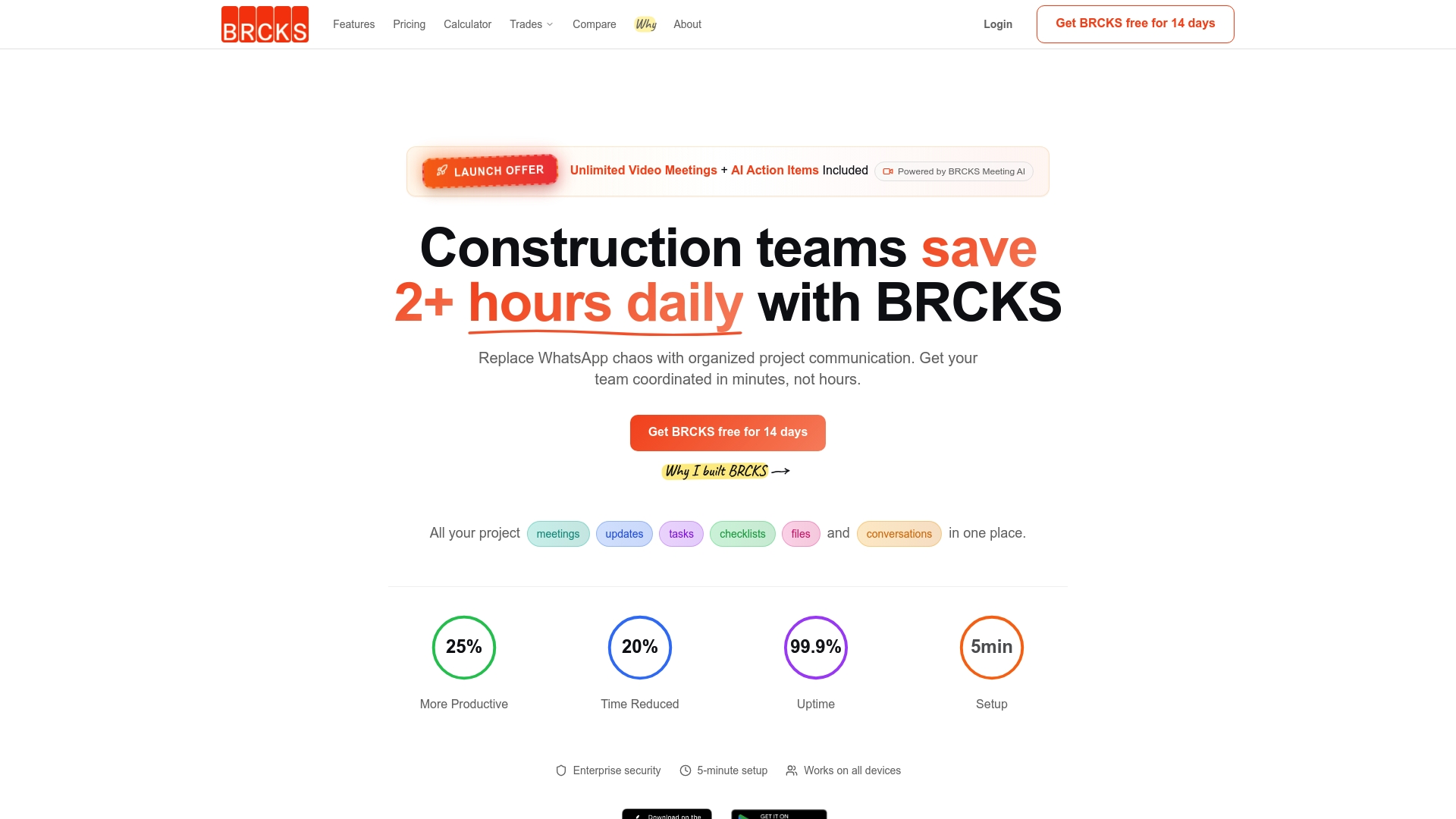
The variation log in BRCKS records every change with pricing and approval status, so your change control process has a live audit trail without extra data entry. Client portals keep owners informed without disrupting site workflows. For residential builders who want their construction software for builders to support their systems rather than replace them, BRCKS offers a 14-day free trial with no commitment required.
FAQ
What are residential project organisation strategies?
Residential project organisation strategies are the structured systems covering phased planning, subcontractor sequencing, change control, and communication that keep residential builds on time and on budget.
How many phases does a typical residential build involve?
A well-managed residential build follows an 11-phase framework from lot acquisition to final closeout, with each phase gating the next through defined inspections and completion criteria.
Why is a ‘no signature, no work’ policy so important?
Builders who do not enforce written approval before proceeding with variations consistently lose money through unrecovered change order costs that accumulate across the project lifecycle.
How often should project managers communicate with clients?
Weekly written status reports covering budget, programme, live issues, and upcoming decisions are the recognised best practice for residential project communication in 2026.
Can software replace a manual organisation system?
Software automates and enforces an existing system but cannot substitute for one. Teams must establish disciplined manual processes before introducing software to get reliable results.
Recommended
- Construction Software for Builders | BRCKS
- Why 68% of UK Residential Construction Projects Go Over Budget (And How to Stop It) | BRCKS
- Remote Construction Management: Best Practices for Success
- Digital Tools in Residential Construction: 5-8% Savings | BRCKS
How BRCKS Can Help
Implementing these organisational strategies will significantly reduce the daily friction of managing complex residential builds and keep your site running smoothly. BRCKS simplifies this process by centralising your project data and communication into one intuitive platform, ensuring nothing slips through the cracks. By integrating these professional habits with our purpose-built software, you can reclaim your time and focus on delivering high-quality homes. We invite you to explore how BRCKS can transform your project management and help your construction business thrive. Learn more at BRCKS and explore our full feature set.