Site meeting process 2026: UK construction guide
A comprehensive guide to mastering the 2026 site meeting cycle in the UK, ensuring legal compliance under CDM 2015 and protecting your business from costly disputes.
By James Shorter ·
Site meeting process 2026: UK construction guide
TL;DR:
- The site meeting process in UK construction is a structured cycle of meetings that ensures compliance, decision-making, and accountability. Proper documentation and role separation prevent disputes, protect businesses, and promote project safety and efficiency. Using digital platforms enhances recordkeeping and reduces risks associated with informal communication tools.
The site meeting process in construction is a structured, time-bound sequence of planned gatherings designed to align stakeholders, document decisions, and maintain regulatory compliance throughout a project. For UK construction professionals, getting this process right in 2026 is not optional. Documented meetings are legal compliance evidence under CDM 2015, and principal contractors must produce them during HSE inspections. The standard framework covers meeting types, agenda timing, minute distribution, and digital documentation, all of which directly affect project cost, safety, and dispute risk.
What is the site meeting process 2026 and why does it matter?
The site meeting process is the organised cycle of pre-construction briefings, progress reviews, safety talks, and owner-level reviews that runs from project start to handover. Each meeting type serves a distinct purpose and targets a specific audience. Without a defined cycle, decisions get made verbally, accountability disappears, and disputes follow.
Proper documentation of meeting decisions can save up to £25,000 per project in avoided disputes related to scope changes and verbal directions. That figure reflects what happens when teams rely on memory rather than minutes. The financial case for a structured process is clear before a single brick is laid.
CDM 2015 places the duty on principal contractors to hold and record pre-start and progress meetings. These records are not administrative paperwork. They are the evidence base that protects your business if a project goes wrong.
What are the key types of site meetings?
Construction projects use four main meeting types, each with a defined role in the project lifecycle.
- Pre-construction meeting. Held before work begins, this meeting aligns scope, programme, communication protocols, and health and safety responsibilities. All key subcontractors and the client representative attend. The output is a signed record of agreed responsibilities.
- Weekly or bi-weekly progress meeting. The core operational meeting. Teams review completed work, upcoming programme milestones, open RFIs, and site issues. Duration should not exceed 60 minutes, with the agenda distributed 24–48 hours prior and minutes sent within 24 hours.
- Monthly owner-architect-contractor (OAC) meeting. A higher-level review covering budget, design changes, variations, and major decisions. The client attends here, not at weekly progress meetings. Minutes from OAC meetings carry significant contractual weight.
- Daily toolbox talk. A focused safety briefing lasting 10–15 minutes on a single topic, such as working at height or COSHH. CDM 2015 requires records to be kept for a minimum of three years. That retention period is a legal floor, not a suggestion.
The table below shows how each meeting type differs in frequency, duration, and primary output.
| Meeting type | Frequency | Max duration | Primary output |
|---|---|---|---|
| Pre-construction | Once, before start | 90 minutes | Signed scope and protocol record |
| Progress meeting | Weekly or bi-weekly | 60 minutes | Distributed minutes with action log |
| OAC meeting | Monthly | 90 minutes | Budget and decision register |
| Toolbox talk | Daily | 15 minutes | Signed attendance and topic record |
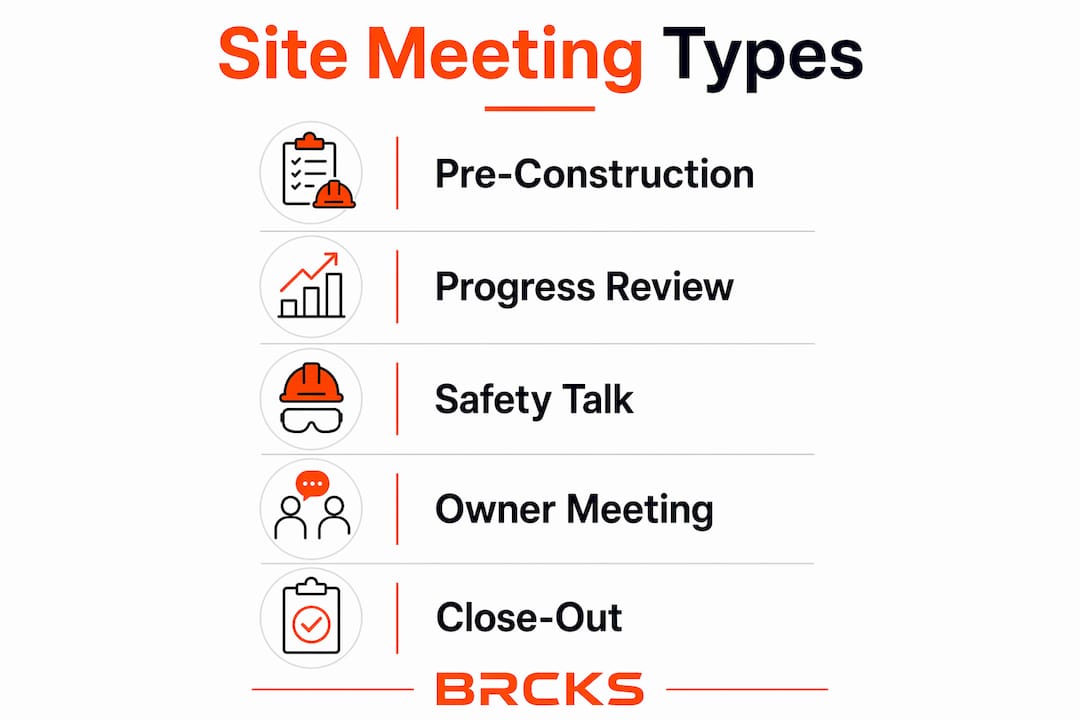
Understanding which meeting serves which purpose stops teams from conflating safety briefings with commercial reviews, which wastes time and dilutes accountability.
How to prepare effectively for site meetings
Preparation determines whether a meeting produces decisions or just conversation. A meeting with no agenda is a discussion with no output.
- Distribute the agenda 24–48 hours before the meeting. Include all relevant attachments: updated programme, RFI log, previous minutes, and any drawings under review. Attendees who arrive prepared make faster decisions.
- Confirm attendee roles. Every meeting needs a designated facilitator and a separate note-taker. Confirm these roles in advance, not on the day.
- Set up the meeting environment. For physical meetings, confirm the room, projector, and printed documents. For virtual meetings, test the link and share-screen access the day before.
- Review previous minutes and open action items. The first agenda item at every progress meeting should be a review of outstanding actions from the last meeting. This creates continuity and accountability.
- Prepare a brief summary of site progress. The site manager should arrive with a written update covering completed work, upcoming activities, and any blockers. Verbal updates from memory waste meeting time.
Pro Tip: Create a reusable site meeting agenda template that mirrors your standard project structure. Populate it with standing items, then add meeting-specific points each week. This cuts preparation time and keeps your meeting workflow consistent across projects.
The contractor project manager carries the primary responsibility for preparation quality. When that role is clear, meetings run to time and produce usable records.
How do you run a site meeting effectively?
Execution is where most site meetings fail. Teams arrive prepared but leave without clear decisions or assigned owners.
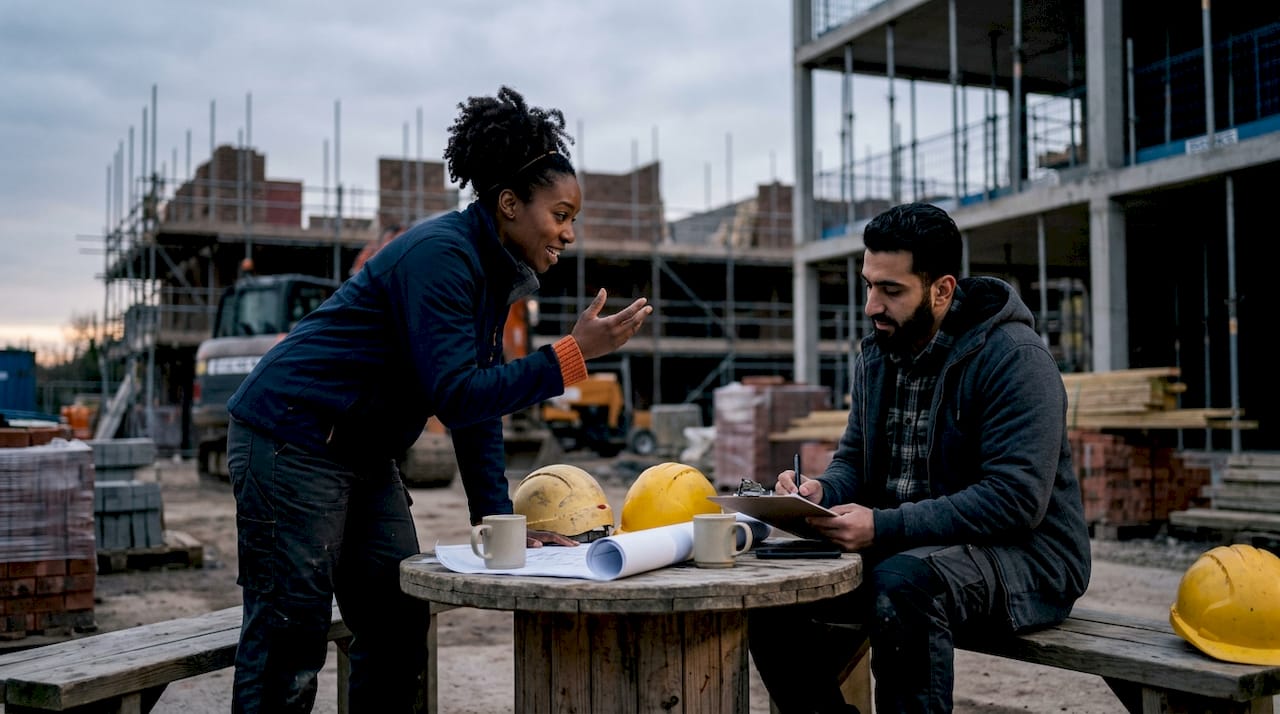
The single most effective structural change is separating the facilitator and note-taker roles. Splitting these roles prevents meetings from becoming narrative summaries and focuses them on decisions and actions with ownership. When one person tries to facilitate discussion and take notes simultaneously, both tasks suffer.
The facilitator’s job is to manage the agenda, keep discussion on topic, and call decisions. The note-taker’s job is to record only decisions, assigned actions, and deadlines. Narrative summaries of who said what are not useful. A decision log with named owners and dates is.
- Start and end on time. Meetings that overrun train attendees to arrive late.
- Park off-topic discussions. Use a “parking lot” list to capture items for a separate conversation.
- Assign every action to a named individual with a specific deadline. “The team will look into it” is not an action.
- Capture the rationale behind key decisions, not just the decision itself. This protects against disputes months later.
- Distribute minutes within 24 hours. The 24-hour rule treats distributed minutes as accurate unless objected to in writing within three business days. This transforms your meeting notes into a binding record.
Pro Tip: Send minutes as a PDF with a read-receipt request. If a subcontractor later disputes a decision, you have a timestamped delivery record and a three-day objection window that has passed.
How do digital platforms improve the site meeting process?
Digital communication tools change what is possible in site meeting management. The gap between what casual apps offer and what construction projects require is significant.
Using WhatsApp for critical project decisions is risky. Purpose-built platforms centralising photos, tasks, and approvals provide reliable audit trails and reduce disputes. WhatsApp has no version control, no task assignment, and no searchable decision log. When a dispute arises six months after a verbal direction, a WhatsApp thread is not evidence.
“Centralised documentation is not a convenience. It is the difference between a project that can defend its decisions and one that cannot. Every photo, task, and approval needs a timestamp and an owner, not a chat message that scrolls out of view.”
Purpose-built platforms address this directly. They capture timestamped photos, link tasks to specific meetings, and produce exportable records for HSE inspections or contract disputes. The benefits for project communication extend beyond meetings to daily site diaries, RFI tracking, and variation logs.
Digital adoption is most effective when structured with site champions and clear usage protocols.ls, increasing uptake among subcontractors and office staff. Appointing one person per trade to champion the platform removes the barrier of unfamiliarity. A pilot on a single project phase before full rollout reduces resistance.
Site inductions connect directly to the meeting process. CDM 2015 requires site-specific inductions covering updated muster points, emergency procedures, and hazards, with records retained for six years for civil claims. Digital platforms that capture induction sign-offs alongside meeting records give you a single, auditable compliance file.
What are the most common site meeting problems and how do you fix them?
Even well-intentioned teams run into recurring problems. Identifying them early stops small inefficiencies from becoming project risks.
- Unclear or missing agenda. Meetings without a distributed agenda produce discussion, not decisions. Fix this by making agenda distribution a non-negotiable step, with a 24-hour minimum lead time.
- No decision documentation. Verbal decisions made in meetings are forgotten or disputed within days. Every decision needs a written record with a named owner before the meeting ends.
- Untracked action items. Actions assigned in one meeting and never reviewed in the next create a culture of low accountability. Open a standing agenda item at every meeting to review previous actions.
- Disputes over minutes. When a subcontractor claims the minutes do not reflect what was agreed, the three-day objection window is your protection. If they did not object within three business days of receiving the minutes, the record stands.
- Meeting fatigue from poor frequency management. Weekly meetings on a slow-moving project waste time. Monthly meetings on a fast-moving fit-out miss critical issues. Match meeting frequency to project phase and pace.
Pro Tip: Review your site communication approach at the start of each project phase, not just at the beginning of the project. A pre-construction meeting cadence rarely suits the fit-out phase.
Empowering your facilitator to close discussions and call decisions is the most underused fix in UK construction. Many facilitators feel uncomfortable cutting off a senior subcontractor. Establishing that role authority in the pre-construction meeting removes that friction before it starts.
Key takeaways
A structured site meeting process, backed by digital documentation and clear role separation, is the most reliable way to protect project decisions and meet CDM 2015 compliance requirements.
| Point | Details |
|---|---|
| Meeting types serve distinct purposes | Match the right meeting format to the right audience and project phase. |
| Agenda and minutes timing is non-negotiable | Distribute agendas 24–48 hours before and minutes within 24 hours after every meeting. |
| Separate facilitator and note-taker roles | Role separation produces decision logs, not narrative summaries. |
| Digital platforms replace casual apps | Purpose-built tools provide timestamped, auditable records that WhatsApp cannot. |
| CDM 2015 compliance requires documented records | Toolbox talk records must be kept for three years; induction records for six years. |
What I have learned from years of watching site meetings go wrong
The most common mistake I see on UK construction projects is treating the site meeting as a social update rather than a decision-making event. Teams gather, people talk, and everyone leaves with a slightly different understanding of what was agreed. The minutes, if they exist at all, arrive three days later and read like a narrative of the conversation rather than a list of decisions.
Separating the facilitator and note-taker roles is the single change that produces the biggest immediate improvement. I have watched the same team go from producing four-page narrative minutes to a one-page decision log simply by giving two people two distinct jobs. The decision log was more useful, arrived faster, and was never disputed.
The 24-hour distribution rule is equally underused. Most teams treat minutes as a courtesy document. They are not. Distributed within 24 hours and unchallenged within three business days, they become a binding record. That matters enormously when a subcontractor disputes a scope change six months later.
My honest view on digital tools is this: the teams still running site meetings on WhatsApp group chats are not saving time. They are deferring the cost of poor documentation to the dispute stage, where it is far more expensive to resolve. The move to a centralised construction platform is not a technology decision. It is a risk management decision.
— James
How BRCKS supports your site meeting process
Construction teams that run structured meetings still need a reliable place to store the output. Minutes, photos, action logs, and induction records scattered across email threads and shared drives create the same risk as no documentation at all.
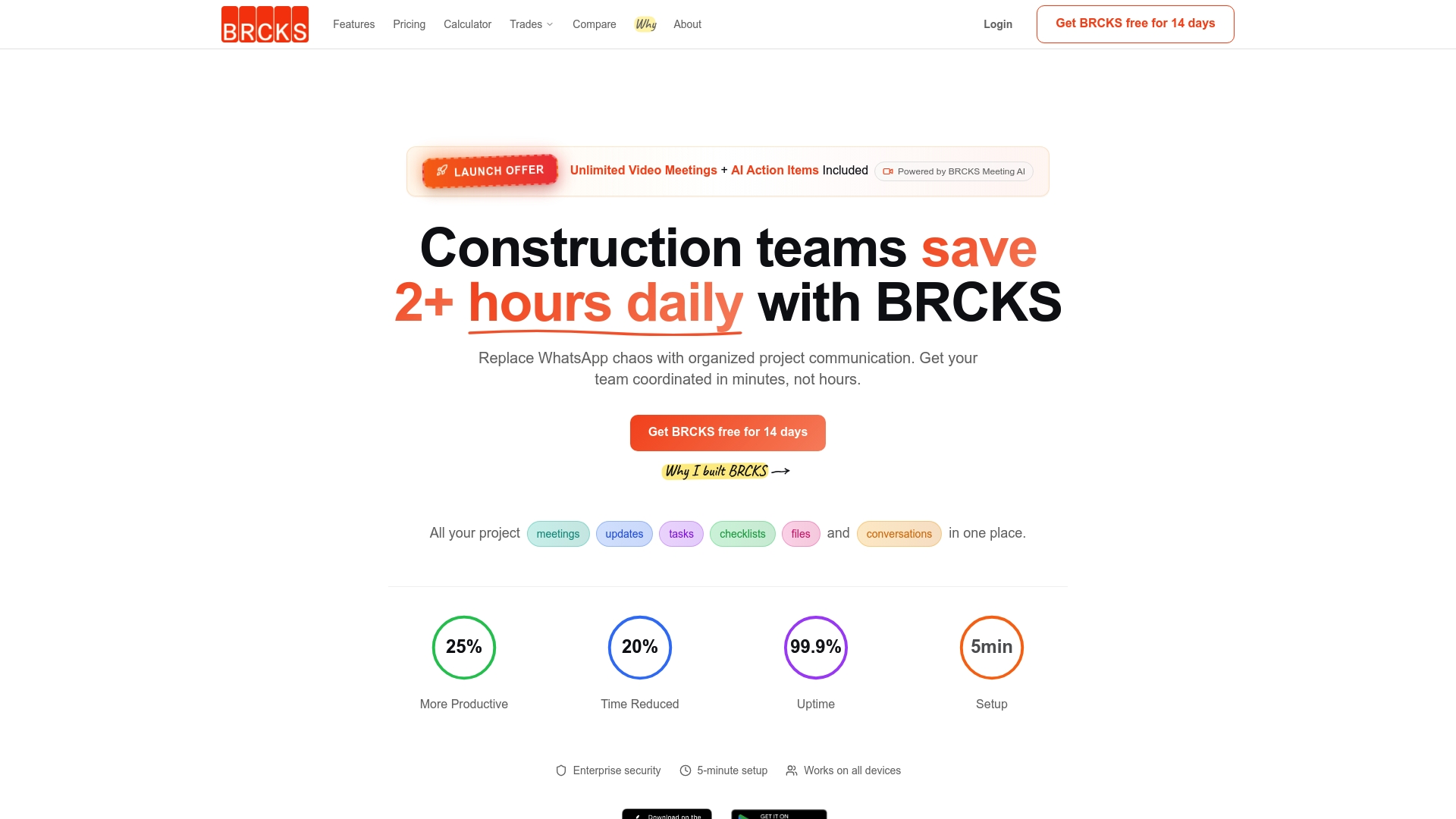
BRCKS gives UK builders and site managers a centralised platform where meeting records, site diaries, RFI logs, and variation records live in one auditable place. The platform captures communications in real time, assigns tasks with named owners, and produces timestamped records that hold up under HSE inspection or contract dispute. Onboarding subcontractors takes minutes, not days. Teams using BRCKS report saving over two hours of manual admin daily. If your current process relies on WhatsApp or email for critical decisions, the BRCKS construction platform is built to replace that risk with a structured, compliant workflow. Try it free for 14 days.
FAQ
What is the standard duration for a site progress meeting?
Effective site progress meetings should be limited to 60 minutes. Agendas should be distributed 24–48 hours in advance to keep discussions focused.
How long must toolbox talk records be kept under CDM 2015?
CDM 2015 requires toolbox talk records to be retained for a minimum of three years. Site induction records must be kept for at least six years to cover civil claims.
What is the 24-hour rule for meeting minutes?
Minutes distributed within 24 hours of a meeting are treated as accurate unless a written objection is raised within three business days. This makes them a binding project record.
Why is WhatsApp unsuitable for site meeting decisions?
WhatsApp lacks version control, task assignment, and a searchable audit trail. Purpose-built platforms provide timestamped records that are admissible in disputes and HSE inspections.
How often should site progress meetings be held?
Weekly or bi-weekly meetings suit most active construction phases. Meeting frequency should be reviewed at each project phase change to match the pace of work on site.
Recommended
- BRCKS | Construction Project Communication Software
- Construction Team Onboarding Checklist: 2026 UK Guide
- UK Construction Project Coordination Best Practices 2026 | BRCKS
- Top Construction Reporting Tools for UK Sites Compared | BRCKS
How BRCKS Can Help
As the UK construction landscape evolves toward 2026, mastering the site meeting process is essential for maintaining project momentum and compliance. BRCKS simplifies this transition by centralising your meeting minutes, action items, and site records within a single, intuitive platform. By automating follow-ups and ensuring data transparency, our software helps your team focus on building rather than administrative hurdles. We invite you to explore how BRCKS can modernise your site management and drive greater efficiency across your future projects. Learn more at BRCKS and explore our full feature set.