Top communication challenges for builders in 2026
Poor communication is the single biggest operational threat to UK construction projects in 2026, costing the industry billions in rework and delays. Discover how to fix it.
By James Shorter ·
Top communication challenges for builders in 2026
TL;DR:
- Poor communication in UK construction projects in 2026 causes delays, disputes, and rework worth billions. Building effective systems reduces interruptions, unifies records, and improves clarity, helping projects stay on track. Using structured, centralised communication channels and AI tools enhances project efficiency and safety.
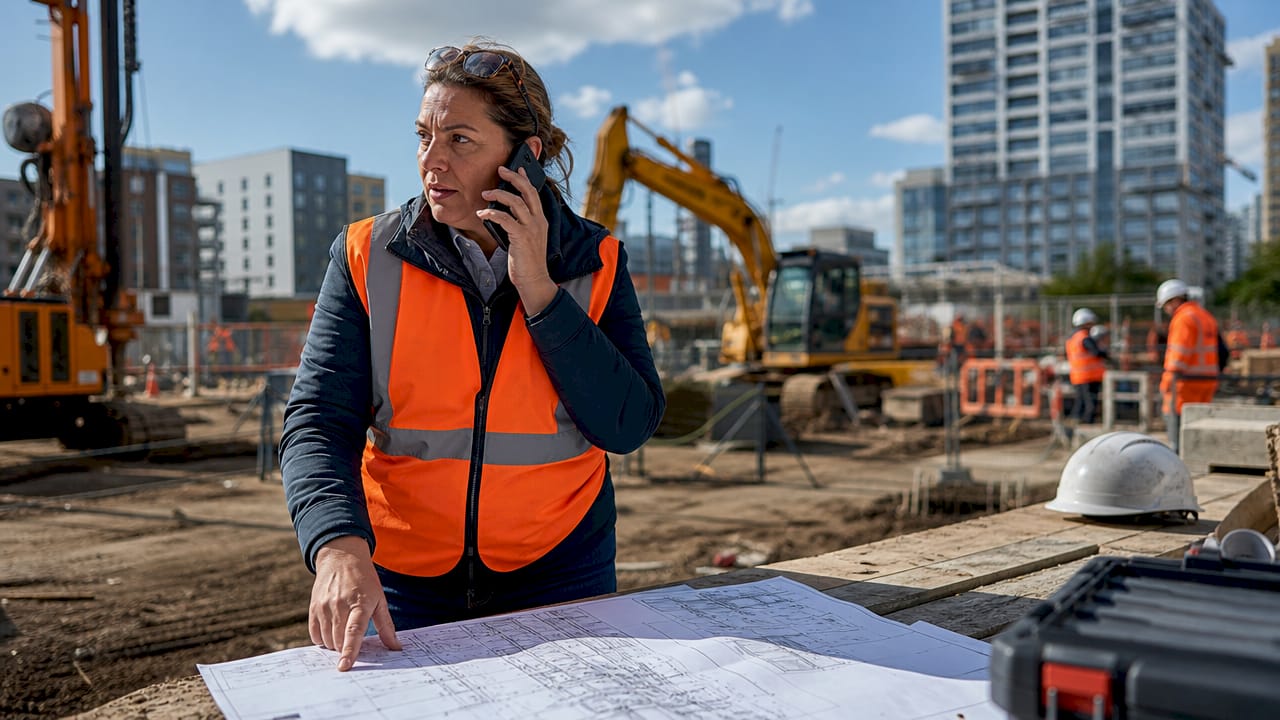
Poor communication is the single biggest operational threat to UK construction projects in 2026, costing the industry billions in rework, disputes, and delays. Project managers face interruptions every 6–8 minutes, site teams rely on fragmented WhatsApp threads, and AI tools are creating new problems as fast as they solve old ones. The top communication challenges for builders in 2026 are not abstract. They are daily, measurable, and fixable. This article sets out each challenge with evidence and gives you a clear picture of what to do about it.
1. Constant interruptions are destroying project manager focus

Construction project managers are interrupted every 6–8 minutes, with each interruption costing 15–20 minutes of lost focus and productivity. That is not a minor inconvenience. It is a structural problem that compounds across every working day.
The majority of these interruptions are routine enquiries: material delivery times, drawing locations, access codes, subcontractor contact details. None of them require a project manager’s professional judgement. Yet they consume the time that should go to programme control, risk management, and client relationships.
Automated enquiry systems reduce interruptions by 35–45% for mid-sized UK contractors generating between £2m and £20m annually. That recovery of management time has a direct impact on project delivery and profitability.
Pro Tip: Map your interruptions for one week before choosing a solution. Categorise each query by type. You will likely find that 60–70% are answerable without you.
2. Fragmented channels create invisible risk
Fragmented communication channels, including WhatsApp, emails, texts, paper notes, and verbal instructions, are the leading cause of costly errors on UK construction sites. The problem is not the volume of messages. It is that no single channel holds the full picture.
When a variation is agreed verbally on site and confirmed by WhatsApp, but never logged formally, the result is predictable. Disputes arise, rework follows, and the cost of a single miscommunication can exceed £4,000 per mistake, with some disputes running for months. That figure does not include the programme impact or the management time spent resolving it.
Fragmented, multi-channel communication creates invisible risks: rework, delayed tasks, and payment disputes that could be avoided with a unified record. The solution is a single source of truth for drawings, specifications, and variations, accessible to everyone with a stake in the project.
Common consequences of fragmented channels include:
- Missed updates when messages are sent to the wrong group or thread
- Contradictory instructions from different channels reaching the same operative
- No auditable record when a dispute reaches a formal stage
- Delayed responses because the right person never saw the original message
3. AI-generated emails are burying critical actions
AI tools are now widely used across UK construction to draft emails, summarise meetings, and respond to client queries. The problem is that AI-generated emails often become long, polished walls of text that obscure the critical next action and the person responsible for it.
A well-structured construction email should lead with the decision, name the action owner, state the deadline, and list any constraints. What AI typically produces is the opposite: context first, conclusion buried, no clear owner. The recipient reads 400 words and still does not know what they are supposed to do.
Effective construction emails prioritise decisions, action owners, deadlines, constraints, and evidence upfront, followed by explanations. That structure is what ensures accountability and clarity on fast-moving projects.
Long AI-generated emails delay material approvals, slow inspection scheduling, and push subcontractor decisions back by days. The tool is not the problem. The absence of a clear communication format is.
Pro Tip: Before sending any AI-drafted email, rewrite the first sentence to state the decision or action required. If you cannot do that in one sentence, the email is not ready to send.
4. Reaching dispersed site staff and subcontractors
The construction workforce is dispersed, multilingual, and largely site-based. Many workers lack direct email access and rely on cascaded messages or unofficial WhatsApp groups to receive safety and operational updates. That reliance creates serious gaps.
When a safety update travels through three layers of cascade before reaching an operative, the message changes. Key details drop out. Urgency is lost. The operative on the ground receives something different from what the site manager sent. Under the Building Safety Act, consistent and documented communication is not optional. It is a compliance requirement.
Shift patterns and language barriers add further complexity. A Polish-speaking groundworker on a night shift and a British electrician on days may both need the same information, but neither the format nor the timing suits both. Poor communication in these conditions contributes directly to higher staff turnover. Replacing a skilled tradesperson costs thousands and weeks of lost productivity.
Key workforce communication obstacles include:
- No reliable channel for reaching workers without email access
- Cascade communication that distorts the original message
- Language and literacy barriers that standard written formats do not address
- Shift-based teams who miss briefings and updates given at fixed times
- Subcontractors operating outside the main contractor’s communication systems
5. Social media and skills pipeline communication
32% of young people cite social media as a major influence on their career decisions in construction. That figure, highlighted by the Chartered Institute of Building (CIOB), shows that workforce communication extends well beyond the site boundary. Attracting the next generation of tradespeople depends on how the industry communicates its value externally.
Proposed government restrictions on social media access for younger audiences risk reducing career outreach without any alternative channel in place. The CIOB has been explicit on this point. If construction does not communicate where young people already are, the skills shortage worsens.
This is a communication challenge that sits with contractors, trade bodies, and employers equally. Builders who invest in visible, credible social media presence are already seeing a return in recruitment and apprenticeship applications.
6. Poor communication drives staff turnover
Poor internal communication is a primary driver of staff turnover in construction, making structured communication channels a financial priority, not just an operational one. Workers who feel uninformed, unheard, or excluded from decisions disengage and leave.
Two-way communication is the fix. That means not just broadcasting updates downward, but creating structured feedback loops where site staff can raise concerns, flag problems, and confirm understanding. Regular toolbox talks, digital check-ins, and accessible reporting channels all contribute to a stronger safety culture and lower attrition.
The financial case is straightforward. Retaining a skilled tradesperson is cheaper than replacing one. Structured two-way communication channels reduce the conditions that cause people to leave. That makes them a direct investment in project continuity and margin protection.
7. Best practice strategies for builders in 2026
Addressing the builders communication obstacles of 2026 requires a combination of technology, process discipline, and cultural change. No single tool solves all of it. The most effective approaches work together.
AI chatbots that automate subcontractor pre-qualification and client updates can filter 50–65% of routine enquiries before they reach a project manager. That is a significant reduction in distraction, with a typical return on investment within 3–6 months. The setup cost for a purpose-built construction chatbot sits between £2,500 and £7,000, which is recoverable quickly when management time is properly valued.
Centralising project communication into a single platform reduces disputes, improves record-keeping, and speeds up responses to site issues. Purpose-built construction communication platforms integrate messaging, task tracking, photo updates, and document access in one place. Moving communications from WhatsApp to a dedicated platform provides an auditable record that informal channels cannot.
Effective communication strategies for builders in 2026 also include:
- Using action-first email formats: decision, owner, deadline, constraints, evidence
- Scheduling consistent, structured briefings for site-based and subcontracted workers
- Maintaining a live variation log and RFI tracker accessible to all relevant parties
- Documenting site diaries daily to create a contemporaneous record of events
Pro Tip: Treat your site diary as a legal document, not an admin task. A well-kept daily record has resolved more disputes than any contract clause.
Key takeaways
The most effective way to address construction communication challenges in 2026 is to reduce interruptions, centralise records, and enforce action-first messaging across every channel.
| Point | Details |
|---|---|
| Interruptions cost more than time | Each interruption to a project manager costs 15–20 minutes of focus, compounding across every working day. |
| Fragmented channels create disputes | Miscommunication across WhatsApp, email, and verbal instructions costs £4,000+ per mistake and months of disputes. |
| AI emails need structure | AI-drafted emails must lead with decision, owner, and deadline or they delay approvals and obscure accountability. |
| Workforce reach is a compliance issue | Site-based workers without email access need dedicated channels to meet Building Safety Act requirements. |
| Centralised platforms reduce risk | Purpose-built construction apps provide an auditable record that informal channels cannot replicate. |
What I have learned about construction communication in 2026
The conversation about communication in construction has shifted. It used to be about getting people to use email instead of shouting across a site. Now it is about managing too many channels, too many tools, and too much noise.
The interruption problem is the one I find most underestimated. Project managers know they get interrupted constantly. What they rarely calculate is the compounding cost. Fifteen minutes lost per interruption, multiplied across a day, means a project manager on a busy site may recover fewer than two hours of genuine focused work. That is not a productivity problem. That is a project risk.
On AI, I am cautiously positive but increasingly specific about where it helps. AI drafting tools are genuinely useful for first drafts and for structuring complex responses. They are not useful when the output goes out unedited. The wall-of-text problem is real, and I have seen it delay material approvals on live projects. The fix is not to stop using AI. It is to treat AI output as a draft, not a finished communication.
The workforce piece is the one that gets least attention and deserves the most. Site workers who feel informed and heard stay longer and work more safely. That is not a soft benefit. It is a measurable operational outcome. Builders who build proper communication workflows into their projects from day one spend less time managing crises and more time delivering.
— James
How BRCKS helps builders cut through communication noise
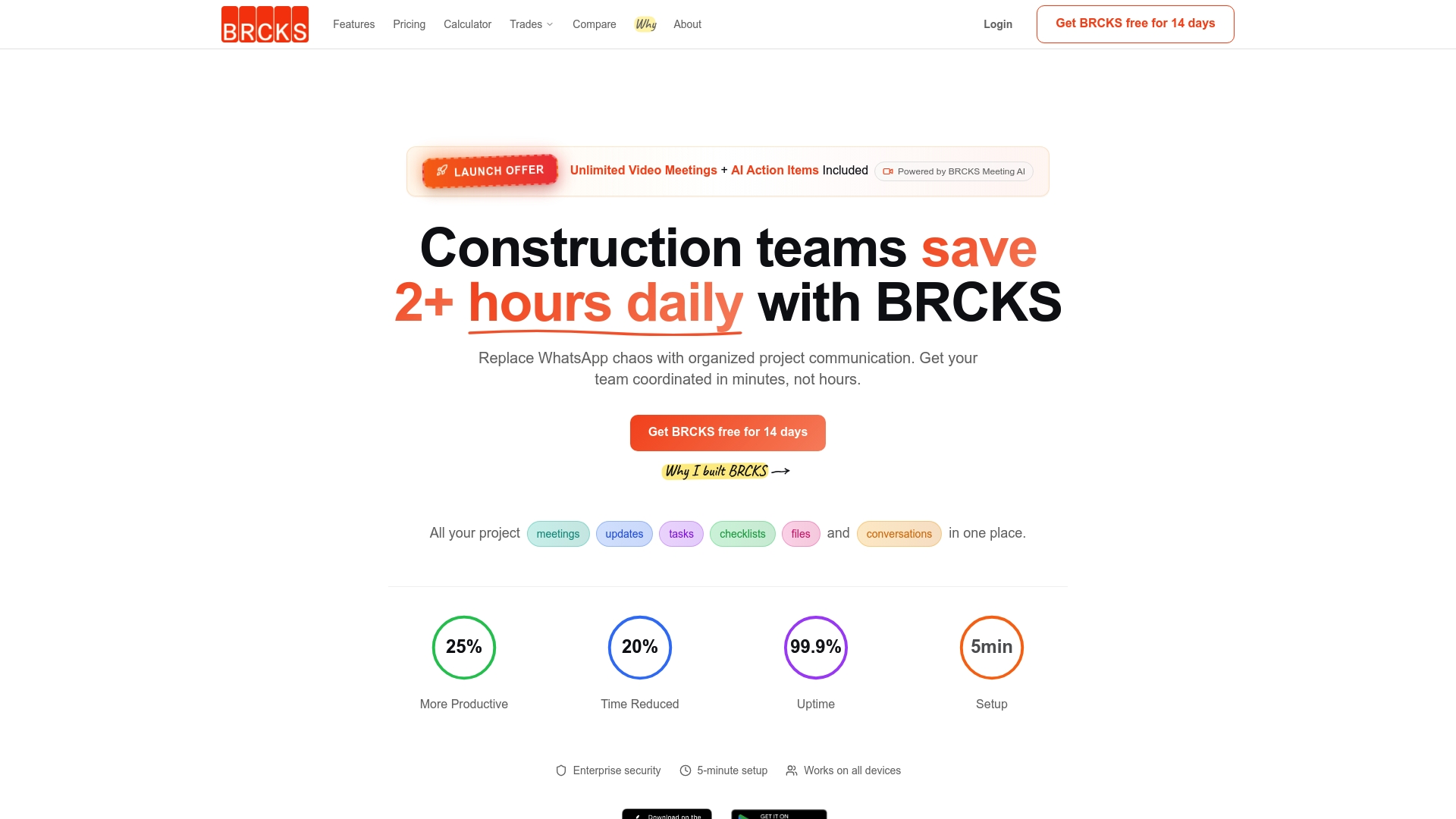
BRCKS is built for UK construction teams who are tired of chasing updates across WhatsApp groups, email threads, and paper notes. It captures communications in real time, optimises site diaries, and tracks RFIs and variations in a structured log that every relevant party can access. Project managers using BRCKS report saving over two hours of manual effort daily. The client portal keeps clients informed without adding to the team’s workload.
If the communication challenges in this article sound familiar, BRCKS is worth a look. You can try BRCKS for builders free for 14 days, with no setup fee and no commitment required.
FAQ
What are the biggest communication challenges for builders in 2026?
The top barriers to construction communication in 2026 are constant project manager interruptions, fragmented channels such as WhatsApp and email, misused AI tools that obscure critical actions, and difficulty reaching dispersed site-based workers consistently.
How much does poor communication cost UK construction projects?
A single miscommunication on a UK construction site can cost over £4,000 per mistake, with disputes running for months and rework adding further programme and cost impact.
How can builders reduce project manager interruptions?
AI chatbots purpose-built for construction can filter 50–65% of routine enquiries before they reach a project manager, with a typical return on investment within 3–6 months of deployment.
Why do AI-generated emails cause problems in construction?
AI-generated emails tend to lead with context rather than action, burying the decision, owner, and deadline. That structure delays approvals and removes accountability. Effective construction emails should state the required action in the first sentence.
What is the best way to communicate with dispersed site teams?
Purpose-built construction communication apps that integrate messaging, task tracking, and document access provide a consistent, auditable channel for reaching site-based and subcontracted workers across shifts and languages.
Recommended
- BRCKS | Construction Project Communication Software
- The Hidden 11% Cost: How Poor Communication Between Trades Is Destroying Your Construction Budget | BRCKS
- BRCKS | Construction Project Communication Software
- The Hidden £13 Billion Cost: How Construction Communication Problems Are Crippling UK Projects | BRCKS
How BRCKS Can Help
Navigating these evolving communication hurdles requires more than just grit; it demands a centralised digital hub that keeps every stakeholder aligned. BRCKS is purpose-built to bridge these gaps, ensuring that real-time data and seamless collaboration remain at the heart of your project delivery. By integrating these tools today, you can turn potential bottlenecks into a distinct competitive advantage for the years ahead. We invite you to explore how BRCKS can transform your site operations and streamline your workflow for 2026 and beyond. Learn more at BRCKS and explore our full feature set.