Upgrade project comms: ditch email and WhatsApp now
UK construction teams face significant legal and operational risks by relying on WhatsApp and email. Learn how dedicated digital platforms enhance accountability and reduce rework.
By James Shorter ·
Upgrade project comms: ditch email and WhatsApp now
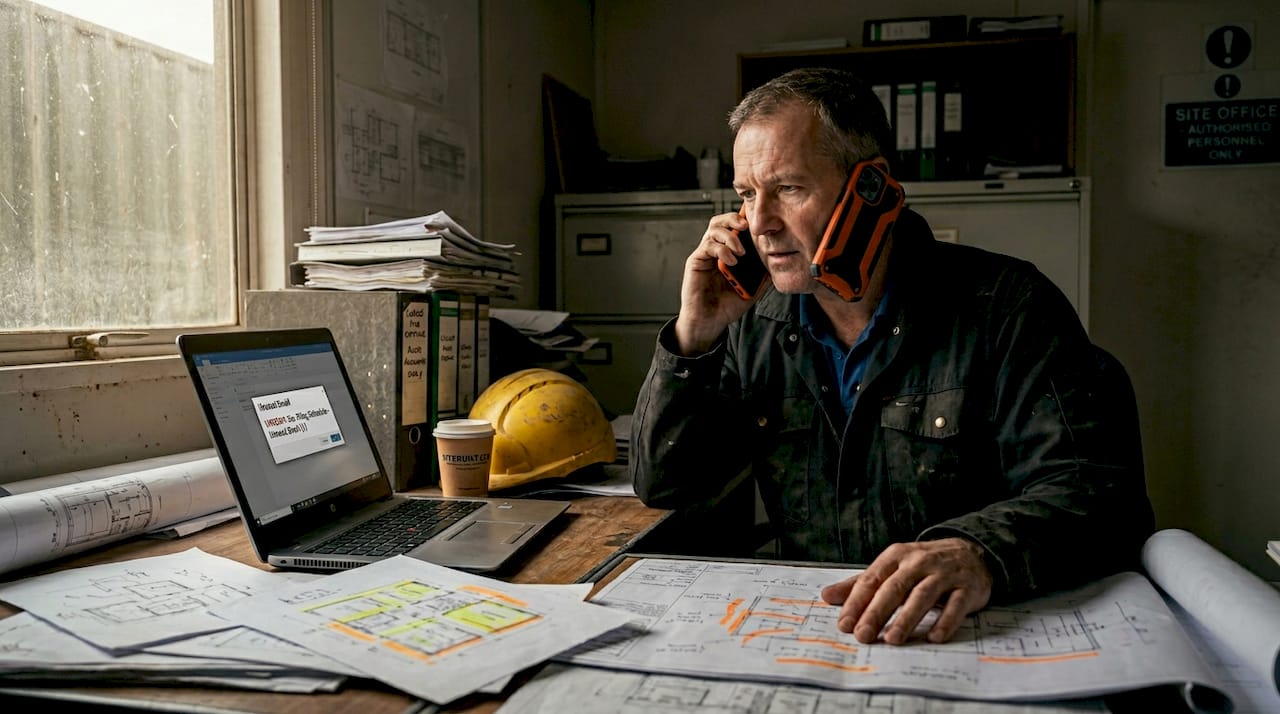 A purpose-built construction snagging software keeps these items tracked through to sign-off.
TL;DR:
- UK construction teams rely heavily on WhatsApp and email, but these methods pose legal and operational risks due to lack of traceability and accountability. Transitioning to dedicated digital platforms improves project management, compliance, and communication efficiency, significantly reducing rework and errors. Embracing workflow-first tools enhances collaboration, builds trust, and positions teams for future success in a more transparent and regulated industry environment.
UK construction teams rely on WhatsApp and email more than any other communication method, yet most project managers have no idea how much risk this creates. On any given project, critical instructions sit buried in inboxes, verbal agreements get confirmed via text, and accountability disappears the moment a message is deleted. What feels convenient today can become a costly dispute tomorrow. WhatsApp messages can inadvertently form legally binding construction contracts if essential terms are present, making the stakes far higher than most teams realise. This article breaks down the risks, the evidence for change, and the practical steps to move your projects forward.
Table of Contents
- Why email and WhatsApp fall short for construction projects
- UK construction’s move to digital tools: Evidence and trends
- Building workflow-first communication: Practical benefits and team wins
- Choosing the right tools for your construction projects
- A fresh perspective: Why the ‘good enough’ mindset holds construction projects back
- Transform your construction project communication with BRCKS
- Frequently asked questions
Key Takeaways
| Point | Details |
|---|---|
| Legal risks of chat apps | Using WhatsApp for project communication can create unintended contracts and compliance issues. |
| Digital adoption rising | Most UK construction clients are now using project monitoring and information management tools for better outcomes. |
| Workflow platforms save time | Dedicated platforms can reduce new project setup time from days to under 30 minutes. |
| Match tools to workflows | Choosing platforms that fit construction routines ensures smoother adoption and greater success. |
Why email and WhatsApp fall short for construction projects
Construction projects live and die by clear communication. Every instruction, variation, approval, and update needs to be traceable, attributable, and retrievable. Email and WhatsApp were never designed for this. They were built for quick personal exchanges, not for managing multi-trade sites, formal document trails, or client accountability.
The legal exposure alone should give every UK project manager pause. Under English law, WhatsApp messages can form binding contracts when they contain essential contract terms such as scope, price, and agreement. A casual text to a subcontractor confirming extra work could become a contractual obligation you never formally signed. This is not a hypothetical risk. The English High Court has already confirmed it.
Beyond legal exposure, there are serious operational problems. Messages get deleted. Group chats become cluttered with off-topic content. Key decisions get buried under dozens of unrelated updates. When a dispute arises six months later, nobody can find the original instruction. Email is only marginally better. Long threads fragment context, attachments get lost, and there is no single source of truth for what was agreed and when.
Here is a direct comparison between traditional tools and dedicated construction platforms:
| Feature | Email and WhatsApp | Dedicated construction platform |
|---|---|---|
| Searchable project records | Limited or no | Full, indexed audit trail |
| Document version control | Manual and error-prone | Automated with access controls |
| Task accountability | Unclear and informal | Assigned, tracked, and reportable |
| Legal compliance support | None | Built-in governance features |
| Client visibility | Ad hoc emails | Dedicated client portal |
| Subcontractor coordination | Separate group chats | Unified project workspace |
| Notification reliability | Easily missed | Structured alerts and reminders |
The most common pain points UK project managers report include:
- Lost instructions: A subcontractor claims they never received the revised drawing, but there is no proof it was sent or opened.
- Unclear accountability: Nobody is certain who approved the variation, because it was discussed in a WhatsApp group with 14 members.
- Version confusion: Three versions of the same drawing are circulating via email, and the team on site is working from the wrong one.
- Compliance gaps: There is no record of who received the health and safety briefing, because it was forwarded via email and replies were inconsistent.
“The biggest communication failure in construction is not the absence of information. It is the absence of a reliable system for capturing, sharing, and tracking it.”
When you compare the alternatives to informal tools, as explored in our guide on best construction messaging apps, the gap in capability is significant. Understanding why WhatsApp falls short for client communication specifically is also worth reading before your next project kicks off. See our full WhatsApp vs BRCKS comparison for a detailed breakdown of the differences.
UK construction’s move to digital tools: Evidence and trends
With risks clear, let us look at how UK construction clients are shifting away from old habits and what results they are seeing. The evidence is compelling, and the pace of change is accelerating faster than many project managers expect.
A recent survey of UK buyers and clients reveals that 63% now use project monitoring tools and 36% use information management systems aligned with ISO 19650, the international standard for building information management. This is not a niche movement driven by large contractors. Smaller developers and housing associations are adopting these systems because the commercial and compliance pressure to do so is now significant.
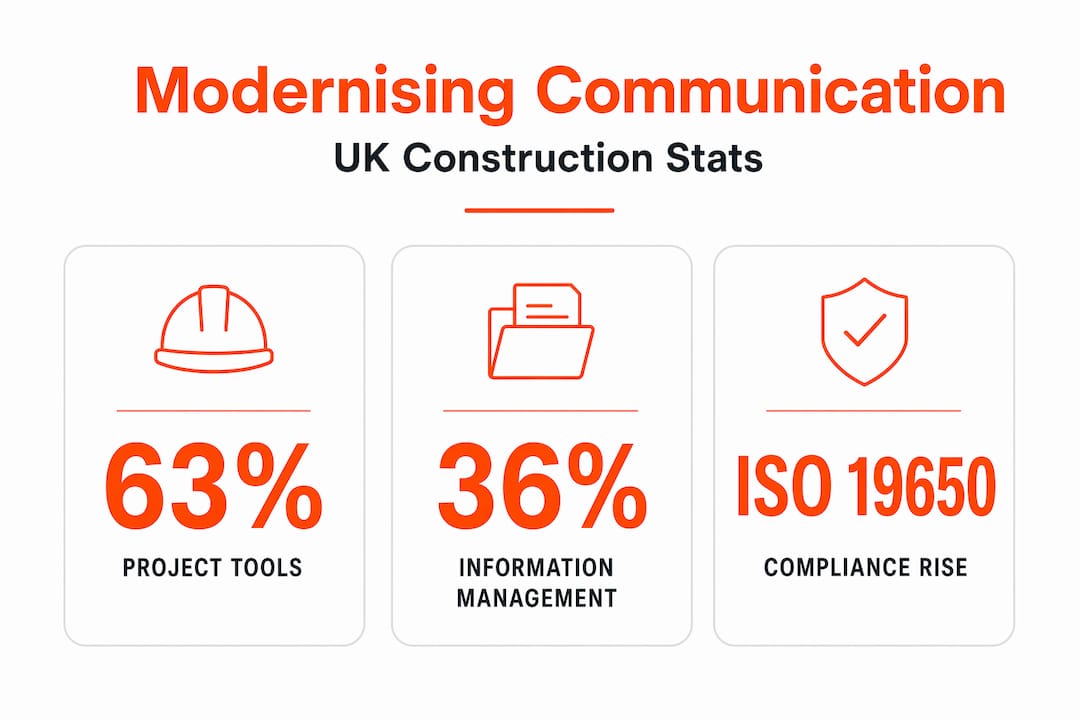
ISO 19650 compliance is particularly important for teams working on publicly funded or government-related projects. The standard requires a structured approach to information management throughout the asset lifecycle, from design through to handover. Email and WhatsApp are fundamentally incompatible with ISO 19650 requirements because they do not support structured information containers, version control, or role-based access.
The financial case for digital tools is equally strong. Consider these figures from across the sector:
| Metric | Improvement reported |
|---|---|
| Project setup time | Reduced from days to under 30 minutes |
| Communication errors | Reduced by up to 70% with structured sharing |
| Rework costs | Cut significantly through clearer workflows |
| Client satisfaction | Higher with transparent portals and updates |
The benefits of digital solutions in UK construction extend well beyond communication. Smarter document control, for example, addresses what some analysts describe as a £21 billion document management problem in the UK construction sector, stemming from inefficiencies, rework, and disputes caused by poor information flow.
Teams making the switch report several consistent gains:
- Faster access to current drawings and specifications on site
- Clearer audit trails for variation orders and instructions
- Reduced time spent chasing updates by phone or text
- Greater confidence in compliance reporting and handover documentation
- Improved relationships with clients who value transparency
For small to medium builders especially, the move to purpose-built project software is often the single biggest operational upgrade they make. The upfront effort of adoption is far outweighed by the ongoing reduction in firefighting, rework, and disputes.
It is worth noting that selecting the right tools also involves thinking through how your team will interact with adjacent software and digital assets. Resources like this on-4" target="_blank" rel="noopener">fence design tools comparison illustrate how even specialist trades are evaluating digital tools based on workflow fit, a principle that applies equally to communication and project management platforms.
Building workflow-first communication: Practical benefits and team wins
Digital adoption is rising, but what does it look like in practice? Shifting to workflow-first communication tools creates real, measurable benefits for UK teams. The key word here is workflow-first. Buying a new tool and replicating your old habits inside it achieves very little. The teams that see the most improvement are those who redesign how they communicate before they choose the technology to support it.
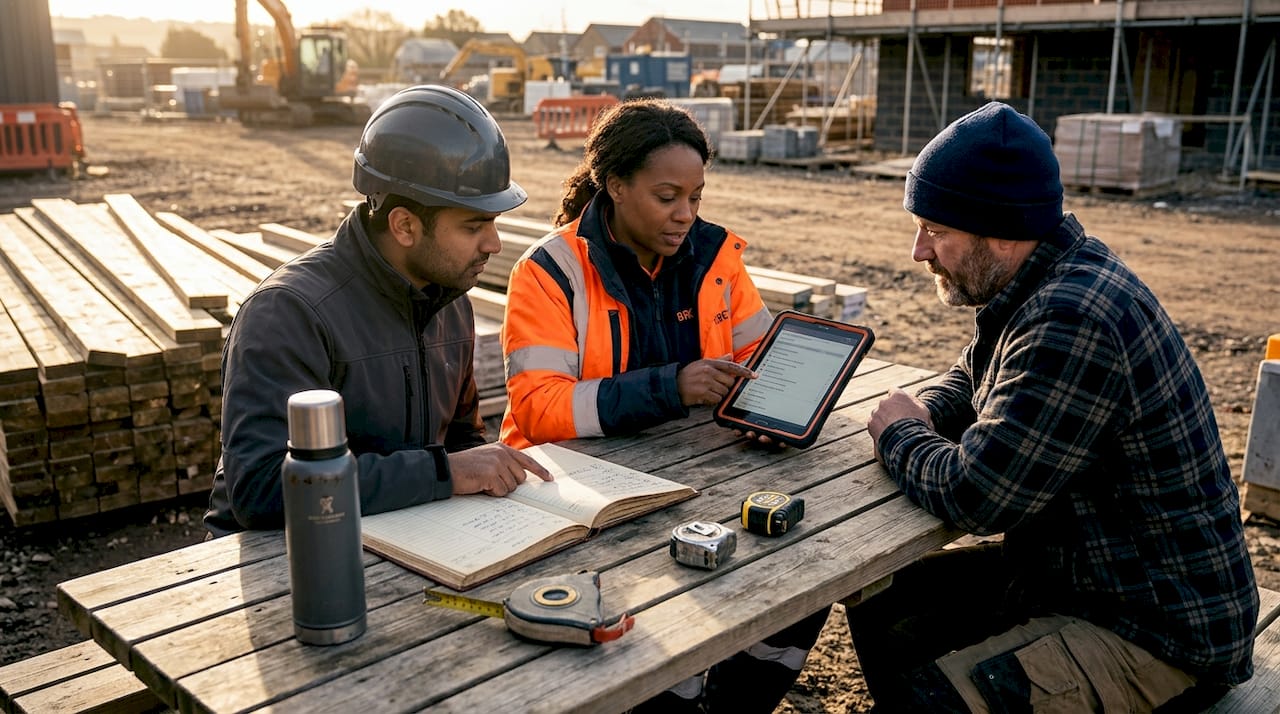
A case study of a residential construction firm demonstrates just how large the gains can be. Replacing email and paper-based coordination with a connected workspace reduced project setup time from days to under 30 minutes. That is not a marginal improvement. It represents a complete rethinking of how project information flows from the moment a contract is signed to the moment a site team receives their first set of instructions.
Here is a practical, step-by-step approach to building workflow-first communication in your team:
- Map your current communication flows. Identify every type of message or document exchanged during a typical project, from design drawings and RFIs to daily reports and snagging lists.
- Identify the failure points. Where do instructions get lost? Where does accountability become unclear? Where do delays occur because someone is waiting for information stuck in an inbox?
- Define your required outputs. What does a completed, well-documented project look like? What records do you need for compliance, handover, and dispute resolution?
- Choose tools that match your workflows. Select platforms that support construction-specific needs such as drawings management, punch lists, and progress reporting, not generic productivity apps.
- Introduce structured communication habits. Establish clear protocols for how and where different types of information are shared, ensuring every team member understands the system.
- Review and iterate. After the first project, gather feedback from site teams, subcontractors, and clients. Refine the workflow based on what worked and what did not.
Workflow-first thinking also has a significant impact on reducing costly rework. Research shows that structured communication workflows cut rework by up to 52% in UK projects. Similarly, better information sharing reduces construction errors by as much as 70%, which has a direct impact on programme delivery and cost control.
Pro Tip: When introducing a new platform, resist the urge to migrate all communication at once. Start with a single project type or a specific workflow such as drawing distribution or snagging. Prove the process works, then expand it across the business.
You can explore more detail on this approach in our construction workflow management guide, which covers everything from initial setup through to full team adoption.
Choosing the right tools for your construction projects
Knowing the benefits, let us look at practical steps for choosing and implementing the right tools for your projects. This is where many teams stumble. The market for project management and communication software is crowded, and not every tool is built with construction in mind.
Teams consistently report greater success when the tools they adopt directly support construction workflows rather than generic communication patterns. A platform designed for marketing teams or software developers will not intuitively handle RFI tracking, site inspection reports, or subcontractor access management.
Use this checklist when evaluating any construction communication platform:
- Construction-specific functionality: Does it support drawings management, snagging lists, site diaries, and progress reporting natively?
- Subcontractor access: Can subcontractors and trades access the platform without complex or costly onboarding?
- Client transparency: Does it offer a client portal or reporting view that keeps clients informed without giving them unfiltered access to internal communications?
- Audit trail and compliance: Does it create a reliable record of who sent what, when, and whether it was acknowledged?
- Mobile usability: Does it work reliably on a phone or tablet on site, not just in an office on a desktop computer?
- Integration with existing tools: Can it connect with your existing estimating, accounting, or design software?
- Scalability: Will it serve a team of five as well as it serves a team of fifty, without becoming unmanageable?
- Support and onboarding: Does the provider offer meaningful support when your team gets stuck, not just a help centre article?
Team buy-in is just as important as the tool itself. If site managers and trades find the platform cumbersome, they will default to WhatsApp within two weeks. Choose software with a clean, intuitive interface and involve your team in the evaluation process before you commit.
It is also worth thinking ahead when it comes to scheduling. Reviewing top construction schedule software alongside your communication platform ensures your team has a joined-up digital environment rather than yet another set of disconnected tools.
Pro Tip: Run a structured pilot with one or two subcontractors before rolling the platform out to your full supply chain. Their feedback will surface usability issues and help you refine your onboarding process before it matters most.
A fresh perspective: Why the ‘good enough’ mindset holds construction projects back
There is a very human reason why email and WhatsApp remain so dominant in UK construction. They are familiar. Every team member already has them. Setup takes seconds. And on most days, they seem to work well enough.
The problem is that “good enough” is a comparison against yesterday’s standard, not tomorrow’s demands. As project complexity grows, as client expectations rise, and as regulatory requirements tighten, the hidden costs of informal communication tools compound. What works on a two-trade residential extension becomes a governance disaster on a 12-trade commercial fit-out.
The construction sector is also undergoing a culture shift. Clients increasingly expect transparency, structured reporting, and digital handover packages. Insurers are scrutinising communication records in disputes. Main contractors are imposing digital information requirements on their supply chains. Teams still relying on WhatsApp threads and email chains are not just inefficient. They are falling behind the expectations of the clients and partners they want to work with.
There is a deeper point here as well. When you move to a workflow-driven platform, you are not just changing tools. You are changing the culture of how your team communicates and collaborates. Decisions become documented. Accountability becomes visible. Clients feel more confident because they can see what is happening. That cultural shift builds trust with clients, reduces internal friction, and makes your business more resilient when things go wrong.
The teams that will thrive over the next decade are not the ones waiting for a crisis to force the change. They are the ones making deliberate, proactive choices to build their communication infrastructure around the way construction actually works.
Transform your construction project communication with BRCKS
Moving away from email and WhatsApp is a significant step, but it does not have to be disruptive. BRCKS is built specifically for construction teams who need a reliable, structured way to manage communication, tasks, documents, and client updates without juggling multiple disconnected tools.
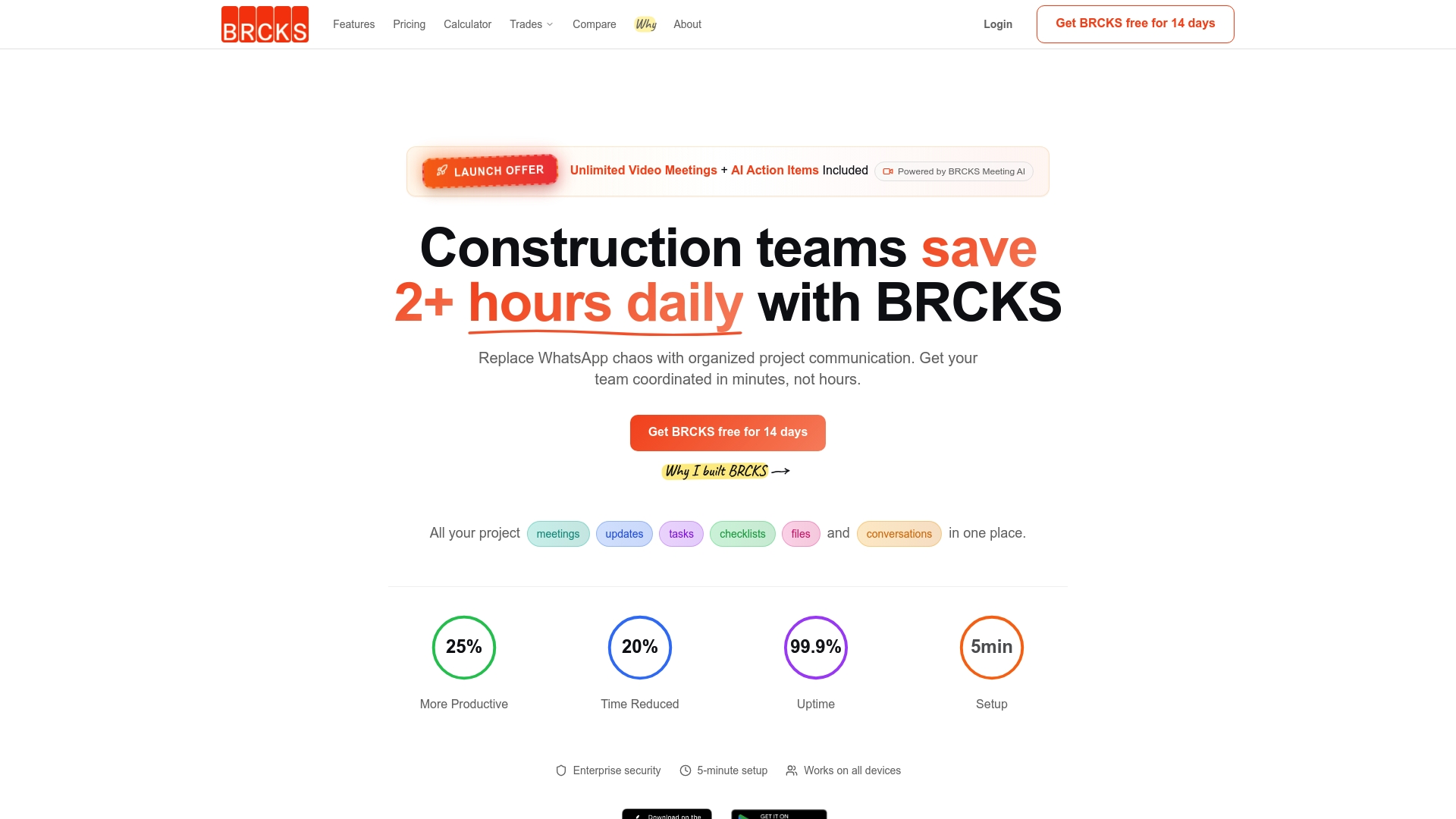
Whether you are a builder managing a handful of projects or a project manager coordinating multiple sites and subcontractors, BRCKS scales to fit your workflow. From purpose-built tools for builders to full-featured construction communication software, every feature is designed around the way construction teams actually work. You get client portals, drawing management, snagging lists, team chat, meeting recordings, and automated updates in a single platform. Subcontractors join for free. Setup takes minutes. If you are still unsure about making the switch, the BRCKS vs WhatsApp comparison gives you a clear, honest breakdown of what changes and why it matters.
Frequently asked questions
Can WhatsApp messages really create binding contracts in UK construction?
Yes. If the messages include essential contract terms such as scope and price, they may be legally binding under English law according to a High Court ruling.
What benefits do dedicated construction communication platforms offer over email and WhatsApp?
They reduce setup time, improve document traceability, and support construction-specific workflows. One case study shows project setup time reduced from days to under 30 minutes after adopting a connected workspace.
How quickly are UK buyers and clients moving to digital project monitoring tools?
Adoption is rapid. 63% of UK buyers and clients now use dedicated project monitoring tools, and over a third have aligned their information management with ISO 19650.
What is the best first step for migrating away from informal communication tools?
Identify your most critical workflows, such as drawing distribution or snagging, and select tools that match those specific processes. Teams report better outcomes when tools are aligned with construction workflows rather than generic communication patterns.
Recommended
- WhatsApp vs BRCKS | Built for Construction Projects
- Tired of WhatsApp? Best Construction Messaging Apps for UK Builders | BRCKS
- WhatsApp Project Management for Construction | BRCKS Bot
- BRCKS - Construction Software That Ends WhatsApp Mayhem
How BRCKS Can Help
Relying on fragmented email chains and informal messaging apps only creates silos that hinder your site’s progress and risk costly misunderstandings. By centralising your project communications within BRCKS, you ensure that every decision and update is documented in a single, professional environment designed specifically for the construction industry. This transition not only protects your project data but also empowers your team to collaborate with far greater clarity and speed. We invite you to discover how BRCKS can transform your workflow by exploring our platform today. Learn more at BRCKS and explore our full feature set.