UK CDM Paperwork: 3 Core Documents That Work on Site
Every UK construction project requires specific CDM documentation. Learn how to manage your construction phase plan and health and safety file to ensure site compliance.
By James Shorter ·
UK CDM Paperwork: 3 Core Documents That Work on Site

Every CDM project needs three core documents, and each has a clear owner: the client ensures pre-construction information exists, the contractor or principal contractor prepares the construction phase plan, and the principal designer coordinates the health and safety file where more than one contractor is involved. Keeping these proportionate, current and ready for handover is what good CDM paperwork management actually means.
TL;DR:
- Every construction project needs a construction phase plan before work begins; scale its detail to project risks, from a brief domestic plan to trade coordination.
- Notify HSE before work starts if work lasts over 30 working days with over 20 workers on site at once, or exceeds 500 person days.
- For projects with multiple contractors, the principal designer coordinates the health and safety file, and the client must confirm any successor’s handover.
- Clients should provide pre-construction information before design and bidding, then update it when surveys or site conditions change so contractors price and assess known risks.
- Collect certificates and construction details from each trade as work finishes, and review project records monthly or at major stage changes before handover.
Table of Contents
- What to keep: an organised checklist of CDM documents and where they belong
- Construction phase plan: what to include and a simple proportionate template
- Health and safety file: purpose, who prepares it and what must be handed over
- Pre-construction information and client duties: what clients must provide and how to make it usable
- When to notify HSE (the F10): rules, timings and the practical steps to submit
- Timeline and key deadlines for CDM paperwork preparation and submission
- Common pitfalls and how to avoid them in CDM documentation
- Best practices for integrating CDM paperwork with site communications and digital tools
- Templates and examples for each CDM document type
- How to audit and review CDM paperwork for compliance throughout the project
- Practitioner perspective: a builder’s view on keeping CDM paperwork simple and useful
- How digital capture tools help: an alternative for teams who want to automate paperwork
- FAQ
- Sources
What to keep: an organised checklist of CDM documents and where they belong
Most CDM paperwork problems come down to not knowing what you actually need to keep, or losing track of where it lives. A working project record has two layers: the core legal documents and the supporting evidence that backs them up.
The core set is pre-construction information, the construction phase plan and the health and safety file. Around these sit the records that prove the work was done safely and to specification.
- RAMS (risk assessments and method statements) for each trade or task
- Drawings and specifications, with clear version numbers and dates
- Test certificates and commissioning records for electrical, gas and mechanical systems
- Asbestos surveys and any other site-specific condition surveys
- Site diaries recording daily progress, visitors and incidents
- Welfare facility records and site rules
- RFIs (requests for information) with their responses and dates
- Variation records (sometimes called change orders) showing what changed, why, and who agreed it
Someone needs to hold the live, current copy of each document, and everyone else needs to know who that is. Version labelling does not need to be elaborate: a date and a revision letter on the file name is usually enough, as long as everyone uses the same convention. Access rules matter too. Subcontractors need the RAMS and drawings relevant to their work, the client needs visibility of progress and decisions, and the principal contractor needs the full picture. A document control approach that keeps one version as the source of truth, rather than several copies circulating by email, avoids most of the confusion that causes disputes later.
Construction phase plan: what to include and a simple proportionate template
A construction phase plan is required for every construction project, no exceptions, but HSE guidance is clear that the plan should be proportionate to the size and risk of the job. A domestic extension does not need the same document as a multi-trade commercial refit, and trying to force one template onto both just produces paperwork nobody reads.
A proportionate CPP covers:
- Project summary, dates and site address
- Key contacts: client, principal contractor, principal designer where appointed
- Site rules and welfare arrangements
- Main hazards on the job and the control measures for each
- Emergency arrangements, including first aid and fire procedures
- Supervision arrangements and how competence is checked
- How trades communicate and coordinate on site
For a small domestic extension, this might run to two or three pages: a single main contractor, a short hazard list covering excavation and working at height, and a simple welfare note. For a multi-trade refurbishment with several subcontractors on site at once, the same sections need more depth, particularly around coordination between trades and how one subbie’s work affects another’s safety. HSE’s CIS80 guidance, known as the Busy Builder template, is built exactly for this: a short, practical CPP format aimed at smaller contractors who need something usable rather than a document that sits in a drawer.
Pro Tip: Start the CPP before work begins, not after the first HSE visit. A plan written in hindsight reads like exactly that.
Health and safety file: purpose, who prepares it and what must be handed over
A health and safety file is required whenever more than one contractor works on a project, and its job is simple: give whoever owns or maintains the building later the information they need to do that safely. The principal designer is responsible for pulling it together, drawing on information supplied by the principal contractor and other dutyholders as the project progresses.
A usable HSF typically contains:
- As-built drawings and specifications reflecting what was actually constructed
- Guarantees, warranties and test certificates for installed systems
- Details of any specialist operations, such as working near services or structural alterations
- Maintenance instructions for plant, equipment and finishes
- Relevant surveys, including asbestos reports where applicable
If a principal designer’s appointment ends before the project finishes, responsibility for the file passes to whoever takes over that role, and the client needs to confirm this handover explicitly rather than assume it happens automatically. At practical completion, the file should be handed to the client in a format they can actually use, not a box of loose paper. Our handover documentation guide sets out what a complete handover pack looks like in practice.
Pre-construction information and client duties: what clients must provide and how to make it usable
Under L153 guidance, clients carry specific duties: making suitable arrangements for managing the project, appointing dutyholders in writing, allocating enough time and resources for each stage, and maintaining those arrangements throughout. Pre-construction information is the practical output of the first duty.
Good PCI typically covers:
- Existing structural and services information, including any known hazards
- Site constraints such as access, boundaries and neighbouring buildings
- Relevant surveys: ground conditions, asbestos, ecology where applicable
- The client’s brief and intended use of the finished building
- Interfaces with other contractors and the project programme
Share PCI with bidders early enough that it shapes their pricing and risk assessments, not after they have already quoted. Update it as surveys come back or conditions change, and treat it as a living document rather than a one-off pack issued at tender stage. Our pre-constructiontion guide covers what clients need to pull together before appointing a contractor.
Pro Tip: If a survey changes the risk picture midway through, reissue the PCI section it affects rather than waiting for a scheduled update.
When to notify HSE (the F10): rules, timings and the practical steps to submit
A project becomes notifiable when construction work will last longer than 30 working days with more than 20 workers on site at the same time, or exceed 500 person days in total. The client is responsible for ensuring notification happens, though in practice the principal contractor often submits it on the client’s behalf.
To submit:
- Gather contacts for the client, principal contractor and principal designer
- Confirm project dates, description and site address
- Submit the F10 online through HSE’s web form
- Keep the serial number generated on submission, since it is needed to edit the notification later
- Display the notice on site where workers and visitors can see it
Timeline and key deadlines for CDM paperwork preparation and submission
CDM paperwork has a natural sequence, and getting the order wrong is where most projects lose time. PCI comes first: clients need this ready before appointing designers, since it directly shapes design decisions and risk assessments. The F10 notification, where the project meets the thresholds, must be submitted before construction work starts on site, not retrospectively once workers are already there.
The construction phase plan needs to exist before the principal contractor allows any work to begin, even on a small job. It then gets reviewed and updated as the project progresses, particularly when new hazards emerge or the sequence of work changes significantly. Waiting until week three to write the CPP because “nothing’s happened yet” is a common shortcut that leaves no plan in place during the riskiest early stages, such as groundworks or demolition.
The health and safety file builds continuously rather than appearing at the end. Each specialist contractor should hand over as-built information and certificates as their work completes, not six months later when someone asks for it. Leaving file compilation entirely to the final weeks means chasing subcontractors who have moved on to other jobs and may no longer have the records to hand.
A reasonable rhythm looks like this: PCI finalised before design starts, CPP drafted before site mobilisation, HSF contributions collected trade by trade as each package completes, and a final review before practical completion to check nothing is missing. Projects that treat these as one-off tasks rather than an ongoing rhythm tend to produce a rushed, incomplete file at the end.

Common pitfalls and how to avoid them in CDM documentation
The most frequent pitfall is writing the CPP as a generic template that never gets updated once work starts. A plan that still lists hazards from the tender stage three months into a project with a completely different risk profile is not doing its job; review and revise it when the work changes.
Another common issue is scattering records across email threads, personal phones and paper site diaries, so that nobody, including the project team, can say with confidence where the current version of anything sits. This makes audits slow and handover painful, because someone has to reconstruct a timeline from fragments after the fact.
Treating the health and safety file as an end-of-project task rather than a running record causes similar problems. Subcontractors who finished their work months earlier are harder to chase for certificates and as-built details once they have moved on, and gaps in the file often only surface when the client tries to use it.
Vague or late pre-construction information is a pitfall on the client side specifically. PCI issued after contractors have already priced the job, or missing key survey data, pushes risk assessment and pricing decisions onto assumptions rather than facts.
Finally, missing or incorrectly timed F10 notification is a straightforward compliance gap. Checking notifiability at the planning stage, not once the project is already running past 30 days, avoids this entirely.

Best practices for integrating CDM paperwork with site communications and digital tools
CDM paperwork works best when it reflects how the site actually communicates, rather than sitting as a separate, parallel process that competes with day-to-day messages. Most site conversations now happen over WhatsApp or similar messaging, and a lot of genuinely useful evidence, from photos of unexpected ground conditions to agreed variations, gets created there and then effectively disappears into a thread nobody can search later.
The practical fix is to treat every work-related message, photo or decision as part of the project record from the moment it is created, rather than trying to reconstruct it afterwards. That means tagging photos to the work package they relate to, logging variations the day they are agreed rather than at the end of the week, and keeping RFIs and their responses in one place rather than split between email and chat.
Industry guidance around the golden thread of information, introduced alongside the Building Safety Act, reinforces this: a single, secure, up-to-date repository serves both day-to-day coordination and long-term compliance far better than scattered folders. The same principle applies on smaller domestic and commercial jobs, even where the formal golden thread requirements do not apply. Keeping one searchable record rather than five partial ones is simply easier to manage and far easier to hand over.
Templates and examples for each CDM document type
You do not need to build CDM templates from scratch. HSE provides free, practical starting points for the documents most projects need.
For the construction phase plan, CIS80’s Busy Builder template gives a short, fillable format aimed at smaller contractors, covering key dates, hazards, welfare and emergency arrangements without unnecessary padding. HSE’s CDM Wizard tool works the same way for general CPP drafting, walking through the sections step by step.
There is no single universal template for pre-construction information, since its content depends heavily on the specific site and project, but L153 sets out the categories a client needs to address: existing information, site constraints, surveys and the project brief. Building a simple PCI checklist from these categories at the start of every project, and filling in what’s known and what still needs surveying, keeps it consistent across jobs.
The health and safety file similarly has no fixed national form, but its expected contents, as-built information, certificates, maintenance instructions and survey results, are well established enough that a standard section list works across most projects, scaled up or down for complexity.
The F10 notification is the one document with a fixed official format: HSE’s online web form itself, which saves progress, generates a serial number, and lets you print or download a PDF copy once submitted.
How to audit and review CDM paperwork for compliance throughout the project
A CDM paperwork audit does not need to be a formal, dreaded event. It works best as a short, regular check against a simple question for each document: does this exist, is it current, and would it make sense to someone who wasn’t on site when it was created?
For the CPP, check it still reflects the actual hazards and sequence of work, not the situation at tender stage. For PCI, confirm nothing material has changed since it was issued, such as a new survey finding. For the health and safety file, check contributions are coming in from each trade as their work completes, rather than discovering gaps at the final week.
A practical review rhythm is monthly on longer projects, and at each major stage change on shorter ones: mobilisation, mid-build, and pre-handover. At each point, check version control: is everyone working from the current drawing revision, and is the previous one clearly marked superseded rather than just deleted? CIOB’s quality management guidance makes the point that duplicated or excessive paperwork distracts from genuine risk control, so an audit should also ask whether any records being kept are redundant, not just whether anything is missing.
The final check, before handover, is whether the health and safety file and completion records would make sense to a facilities manager with no prior knowledge of the project. If they would need to call someone to interpret it, it is not finished yet.
Practitioner perspective: a builder’s view on keeping CDM paperwork simple and useful
Twenty years on site taught me paperwork fails when it’s an afterthought. Write the site note the day it happens, photograph it before you move on, and tag it to the job. A CPP that matches reality beats a tidy document nobody follows.
— James
How digital capture tools help: an alternative for teams who want to automate paperwork
A searchable project record, one place holding site diaries, photo logs, RFI and variation registers, and version-controlled files, solves most of the CDM paperwork problems this guide has covered. Instead of chasing subcontractors for certificates after they’ve left site, or reconstructing a CPP review from memory, the record builds itself as work happens.
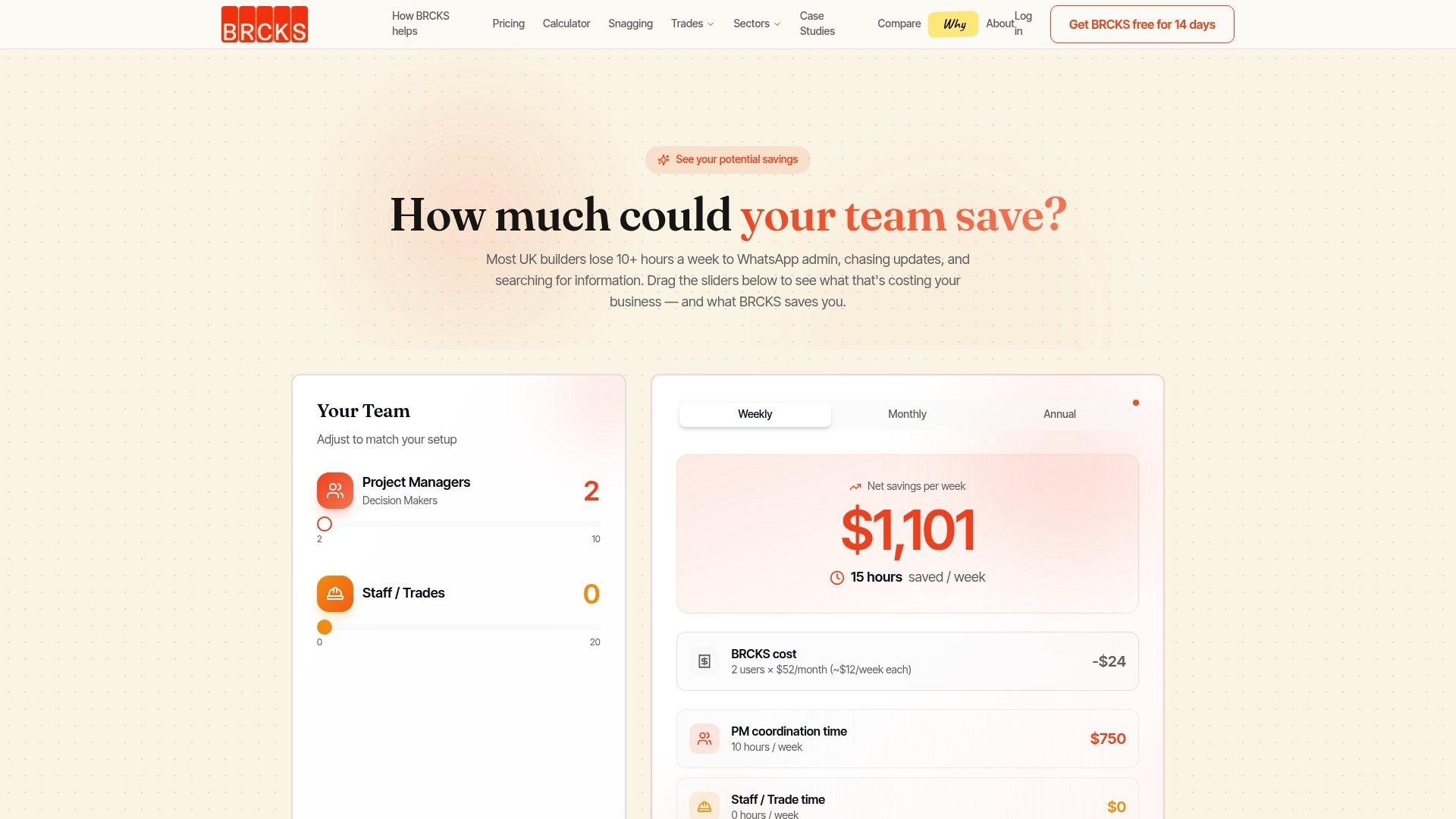
This is exactly the gap suitable construction software fills. We let your team keep messaging the way you already do, including through WhatsApp with a dedicated business number, while automatically building:
- Site diaries from daily messages and photos, without separate forms
- A single variation log with decisions and dates attached
- RFI tracking with a full audit trail from question to answer
- Versioned project files for drawings, RAMS and quotes
- A branded client portal showing progress without constant chasing
- 360-degree site tours for a visual record at key stages
Teams using BRCKS report saving over 30 minutes a day on admin that used to mean hunting through old messages and spreadsheets. Subcontractors and clients join free, and plans for your core team start at £40 per seat per month billed annually. If you want to see how it works on a project like yours, check BRCKS pricing or explore the construction project management software built for UK small builders.
FAQ
What are the main health and safety regulations in CDM?
CDM 2015 sets out duties for clients, designers, principal designers, contractors and principal contractors to plan, manage and monitor health and safety throughout a construction project. The regulations require proportionate documentation, including pre-construction information, a construction phase plan and, where more than one contractor is involved, a health and safety file, as set out in HSE’s L153 guidance.
What is required for CDM?
Every project needs a construction phase plan, regardless of size, and pre-construction information must be provided by the client before design and construction begin. Where more than one contractor works on the project, a health and safety file is also required, and projects meeting certain duration or worker thresholds must be notified to HSE using the F10 form.
What is CDM in the UK?
CDM stands for the Construction (Design and Management) Regulations 2015, the UK legal framework governing how health and safety is managed on construction projects. It assigns specific duties to clients, designers and contractors, with the aim of planning out risks before work starts rather than reacting to them on site.
What are the three main documents referred to in the three stages of CDM?
The three core documents are pre-construction information, prepared with client input before design starts, the construction phase plan, prepared by the contractor or principal contractor before work begins on site, and the health and safety file, compiled by the principal designer and handed to the client at completion. Each one supports a different stage of the project, from planning through construction to handover.
Do small domestic projects still need a construction phase plan?
Yes, a construction phase plan is required for every construction project regardless of size, though HSE guidance confirms it should be proportionate to the scale and risk involved. A short domestic extension needs a much simpler plan than a multi-trade commercial refurbishment, but neither can skip it entirely.
Recommended
- Pre-construction for UK Stakeholders: CDM 2015 Guide
- 4 Subcontractor Onboarding Checks for UK Project Managers
- Site Communication Workflow: UK Project Manager’s Guide
- Drawing Version Control for UK Builders | Golden Thread
How BRCKS Can Help
Managing CDM compliance doesn't have to be a manual burden that slows down your site team. By digitising your construction phase plans and risk assessments through BRCKS, you ensure that vital safety information is always accessible and up to date. Our platform simplifies the administrative side of the UK's health and safety regulations, allowing you to focus on delivering quality work safely. We invite you to see how BRCKS can streamline your site paperwork by booking a demo or starting a free trial today. Learn more at BRCKS and explore our full feature set.