Streamline plumbing project workflows for better teamwork
Discover how to eliminate plumbing delays and improve team coordination through structured workflows and digital monitoring on UK construction sites.
By James Shorter ·
Streamline plumbing project workflows for better teamwork
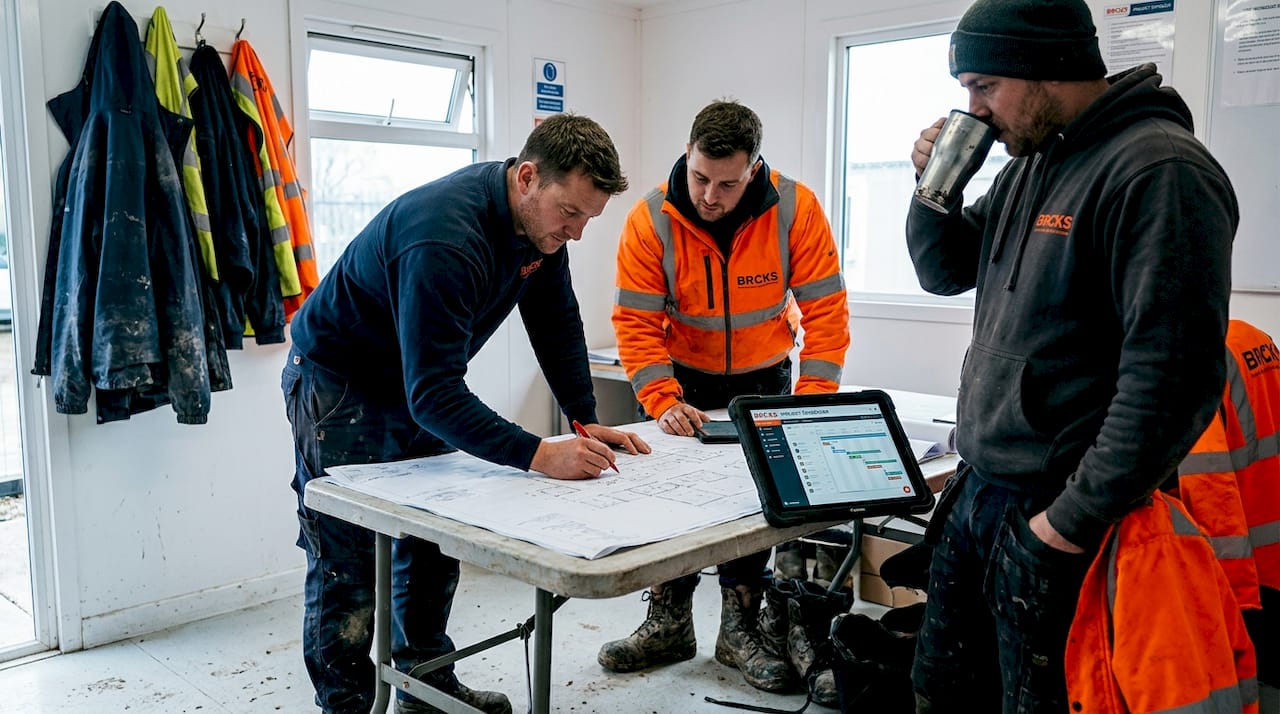 A purpose-built construction snagging software keeps these items tracked through to sign-off.
TL;DR:
- Poor coordination and late design changes are the main causes of plumbing delays on UK construction sites, often leading to overruns and increased costs.
- Thorough site surveys, compliance verification, and structured communication planning are essential for efficient plumbing workflows and avoiding common mistakes.
Plumbing delays are one of the most disruptive forces on any UK construction site, and the root cause is almost always the same: poor coordination. A 2024 survey found that late design changes contribute to overruns on 73% of projects, meaning the majority of plumbing teams are spending more time reacting to problems than executing a plan. For project managers and contractors, that reactive cycle drains budgets, strains trade relationships, and erodes client confidence. This guide walks you through a structured approach to plumbing project workflows, covering preparation, execution, common pitfalls, and how to measure real success.
Table of Contents
- Preparation and prerequisites for plumbing projects
- Step-by-step plumbing workflow process
- Troubleshooting and avoiding common mistakes
- Benchmarking and verifying plumbing project outcomes
- Why most plumbing project workflows fail and how to fix them
- Upgrade your plumbing workflows with BRCKS
- Frequently asked questions
Key Takeaways
| Point | Details |
|---|---|
| Site survey is vital | Thorough surveys prevent surprise delays and ensure regulatory compliance. |
| Phased scheduling prevents overruns | Breaking work into phases and delivering materials early cuts workflow errors. |
| Integrated monitoring boosts efficiency | Using simple digital tools helps teams communicate better and track workflow progress. |
| Benchmark your outcomes | Measuring leakage, callout rates, and fixing issues promptly signals project success. |
| Adapt for unusual sites | Customising workflows for period homes or renovations avoids structural damage and extra costs. |
Preparation and prerequisites for plumbing projects
Every efficient plumbing workflow starts before a single pipe is cut. The preparation phase is where most projects either gain an advantage or lose one. Skipping this stage is the single biggest predictor of delays further down the line.
Conducting the site survey
A thorough site survey is non-negotiable. You need to assess mains water pressure, identify waste routing options, and confirm the condition of any existing infrastructure. For renovation projects especially, this step reveals hidden constraints that will affect your phased schedule and materials list. As noted in the Residential Plumbing Installation Guide, in period homes you must adapt systems without causing structural damage, pressure test before wall closure, and verify mains and waste conditions upfront.
Failing to conduct this survey means your programme is built on assumptions rather than facts. When those assumptions are wrong, you face mid-project changes, which is exactly what causes the overruns referenced above.
Compliance and materials
UK plumbing projects must comply with Water Regulations Part G and Part H, and all materials used should carry WRAS approval. This is not optional. Non-compliant materials can trigger costly remediation work and, in worst cases, legal liability. Build compliance verification into your pre-start checklist so it happens consistently, not just when someone remembers.
Understanding the broader residential construction workflow helps frame how plumbing fits within the wider build sequence, which is critical for avoiding clashes with other trades.
| Preparation task | Why it matters | Recommended timing |
|---|---|---|
| Mains pressure test | Sets system design parameters | Before design sign-off |
| Waste routing survey | Avoids structural conflicts | Pre-start |
| WRAS material check | Ensures regulatory compliance | At procurement stage |
| Period property assessment | Prevents damage to fabric | Before any work begins |
| Team communication briefing | Aligns expectations across trades | Day before mobilisation |
Pro Tip: Prepare a one-page site summary that covers pressure readings, waste routes, and compliance notes. Share it with every trade before they arrive on site. You will spend five minutes creating it and save hours of back-and-forth.
Communication planning
Before work begins, brief the full team on the project sequence, dependencies, and escalation routes. Who decides when a scope change is approved? Who coordinates between the plumber and the first-fix electrician? Defining these roles in advance, and documenting them in a shared platform, is what separates high-performing sites from chaotic ones. Using a structured construction workflow management guide can help you build this foundation systematically.
Bullet points for a solid pre-project communication plan:
- Confirm roles and responsibilities in writing before mobilisation
- Distribute the phased schedule to all trades and subcontractors
- Set a clear process for raising and approving design changes
- Identify the single point of contact for each trade package
- Agree on daily or weekly progress reporting formats
Step-by-step plumbing workflow process
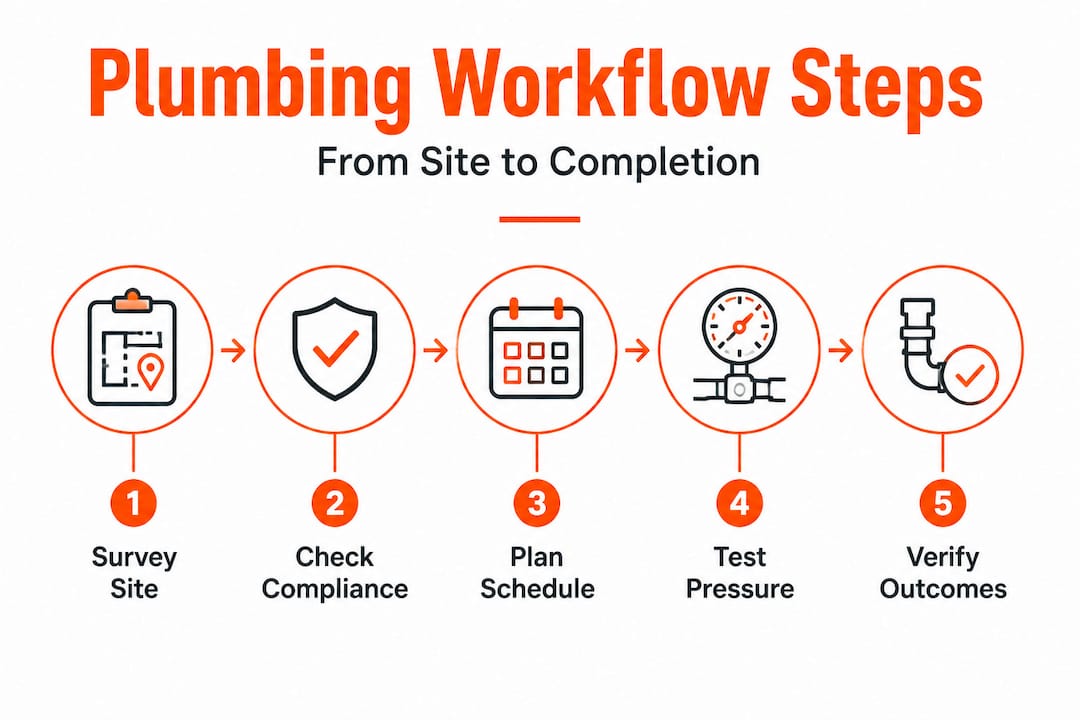
With the groundwork set, the focus shifts to execution. A structured sequence reduces the chance of missed steps, duplicated effort, and the costly rework that follows.
- Finalise design and obtain approvals before any materials are ordered. Changes after procurement are expensive and avoidable.
- Pre-deliver materials to site before the installation phase begins. Waiting for deliveries mid-install is one of the most common causes of idle time.
- Complete first-fix rough-in in coordination with other first-fix trades. Sequence this carefully to avoid conflicts at junctions and ceiling voids.
- Conduct pressure testing before any walls or floors are closed. This is a mandatory step, not an optional quality check.
- Close and finish only after passing the pressure test and signing off the inspection record.
- Commission and handover with documented test results and a clear operation and maintenance pack for the client.
Research from Heriot-Watt University confirms that integrated cost and time control is rare on UK construction projects, with the study recommending detailed planning and integrated monitoring as the primary way to avoid overruns and disputes. The implication is clear: most teams are not doing enough at the planning stage, and the execution phase pays the price.
| Approach | Outcome without integration | Outcome with integration |
|---|---|---|
| Scheduling | Reactive, trade conflicts common | Phased, clashes avoided |
| Material procurement | Delays mid-install | Pre-delivered, minimal idle time |
| Progress monitoring | Verbal updates, hard to audit | Logged, trackable, transparent |
| Change management | Ad hoc, costly disputes | Structured approval, auditable |
For planning and monitoring plumbing projects, having a digital platform that logs progress against a live schedule makes a significant difference. It removes the reliance on memory and informal phone calls, which are precisely where information gets lost.
Pro Tip: Build a hold point into your programme at the pressure testing stage. Nothing progresses to close-in until the test is signed off and recorded. This single discipline prevents the most expensive rework scenarios on any plumbing project.
Supporting trades need visibility too. Using builders workflow solutions allows the wider site team to see where plumbing is in the sequence, reducing the number of times work is accidentally built over or disrupted. Pair this with reliable scheduling tools for builders to keep all trades aligned throughout the build.
Troubleshooting and avoiding common mistakes
Having covered the ideal workflow, it is equally important to recognise where things typically go wrong and how to respond before small problems become large ones.
- Late design changes after materials have been ordered or installation has started
- Poor coordination between the plumber and other first-fix trades, particularly electricians
- Missing or incorrect materials discovered on site during installation
- Insufficient pressure testing leading to leaks after close-in
- Unclear scope boundaries between main contractor and subcontractor packages
A 2024 survey confirms that late changes are the dominant factor in overruns. The fix is not simply to avoid changes. Changes are inevitable. The fix is to manage them through a structured approval process before they affect work on site.
“The most efficient plumbing teams are not the fastest. They are the most prepared. Their site surveys are thorough, their materials are pre-delivered, and their escalation routes are agreed before day one. Speed is a by-product of preparation, not a substitute for it.”
Practical mitigation tactics
Implement a phased schedule that clearly identifies dependency points. If the plumber cannot start second-fix until plastering is complete in a given zone, that dependency should be visible to everyone. Guessing at readiness is where coordination breaks down.
Brief the team in person at key stage transitions, not just via written instructions. A five-minute walkthrough before first-fix starts is worth more than a lengthy email chain. Then back it up with documented records in your project management platform.
Use a communication workflow to cut rework by ensuring every instruction, change, and decision is logged and visible. When everyone can see the current state of the project, fewer mistakes happen simply because fewer assumptions are made.
Keep a running materials checklist updated in real time. If a fitting is missing, you want to know the day before you need it, not the morning you are trying to install it. This is a basic but frequently neglected discipline that consistently saves time and money. You can find more detail on this in a practical money-saving project management resource that covers cost control for builders.
Benchmarking and verifying plumbing project outcomes
After learning how to avoid errors, the next step is measuring how well your workflow actually performed and using that data to improve future projects.
Key performance benchmarks
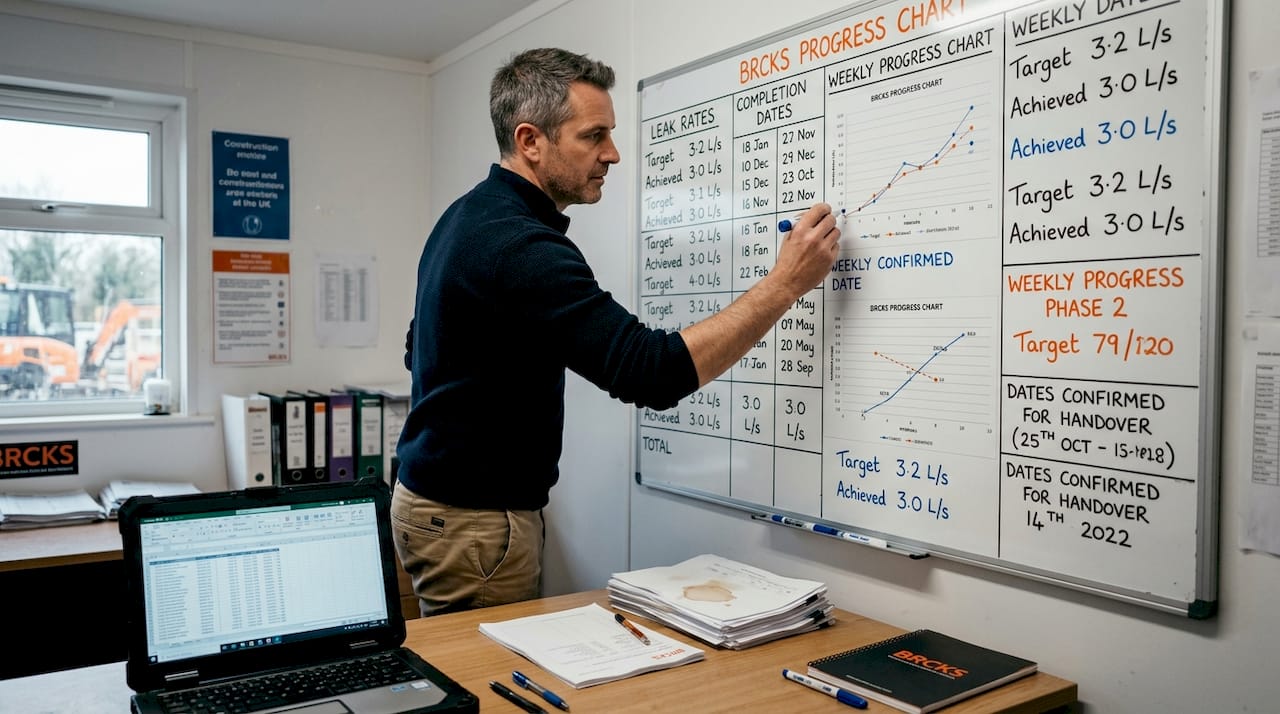
According to industry guidance on plumbing efficiency benchmarks, the following metrics are the most reliable indicators of plumbing workflow success:
| Benchmark | Target | What poor performance indicates |
|---|---|---|
| First-fix rate | Above 80% | Rework, poor planning, or coordination failures |
| Leakage percentage | Below industry baseline | Poor installation quality or non-compliant materials |
| Callout frequency | Decreasing trend over time | Reactive maintenance, insufficient commissioning |
| Water use per occupant | Within design specification | Oversized systems or poor control valve commissioning |
Preventative maintenance programmes and smart metering are increasingly standard in commercial and residential projects. Preventative maintenance cuts reactive calls significantly, and smart meters allow building operators to spot anomalies early before they become defects or complaints.
Market context and the skills shortage
The UK plumbing sector is under real pressure. The UK plumbing market is growing steadily to 2029, driven by housing demand, retrofit programmes, and net zero targets, but the industry needs to recruit approximately 45,000 workers per year simply to maintain capacity. In 2024, 65% of UK households experienced at least one plumbing issue, with leaks accounting for 42% and drainage problems for 28% of reports.
This context matters for project managers. The tradesperson shortage means you cannot afford rework. Every mistake on site costs not just materials but scarce labour hours that are difficult to replace. Getting workflows right the first time is no longer just good practice. It is a competitive necessity.
Useful benchmarking actions to build into your close-out process:
- Record first-fix pass and fail rates by operative and by project
- Track the number of post-handover callouts in the first six months
- Compare planned versus actual installation hours by phase
- Review material waste percentages against project benchmarks
- Document pressure test results and retain for future reference
Investing in digital tools for plumbing efficiency makes this data collection practical rather than burdensome. When records are digital and searchable, end-of-project reviews take minutes instead of hours.
Why most plumbing project workflows fail and how to fix them
Here is an uncomfortable observation from real site experience: most plumbing workflow failures are not technical. They are organisational. The pipe work itself is rarely the problem. The problem is that the people responsible for coordinating it are working from different information, at different speeds, using different tools.
The Heriot-Watt research on integrated project control found that truly integrated cost and time monitoring is rare on UK construction projects. Most sites still rely on phone calls, spreadsheets, and informal updates. When something changes, the information spreads unevenly. Some people know, others do not, and that gap is where expensive mistakes happen.
The conventional wisdom is that you need complex project management software with Gantt charts, resource levelling, and detailed cost codes to fix this. We disagree. Complex tools create their own friction. Teams do not use them consistently, which means the data is always out of date and the tool becomes another source of confusion rather than clarity.
What actually works is a simpler, more consistent system. A platform where every team member, including subcontractors, can see the current schedule, raise an issue, and confirm task completion in under a minute. The value is not in the complexity of the tool. It is in the fact that everyone uses it. Consistent use of a simple system beats occasional use of a sophisticated one every time.
The workflow management guide we have developed reflects this thinking. Start with the basics: shared schedules, task confirmations, and a single channel for change requests. Once those habits are established, add layers as the team’s capability grows.
Upgrade your plumbing workflows with BRCKS
If your current approach relies on phone calls, group chats, and spreadsheets to coordinate your plumbing programme, you are carrying unnecessary risk on every project. BRCKS is built specifically for construction teams who want to replace that fragmentation with a single, straightforward platform.
With BRCKS, your site team gets clear task checklists, real-time progress updates, and a shared project record accessible from any device on site. The construction software for builders includes built-in checklists, file sharing, and automated updates that remove the need for manual follow-up. You can use construction communication software to keep all trade communications logged and auditable, and the snag list software to manage defects at close-out without the usual paperwork burden. Teams save over two hours daily. Get BRCKS free for 14 days.
Frequently asked questions
What is the most common cause of plumbing delays in UK construction?
Late design changes and poor coordination are the leading causes, contributing to overruns on 73% of UK projects according to a 2024 survey. Structured change approval processes and pre-delivered materials are the most effective mitigations.
How can I ensure my plumbing project complies with UK regulations?
Conduct a site survey before design sign-off and confirm all materials carry WRAS approval. Projects must meet Water Regs Part G and Part H requirements, and compliance should be verified at the procurement stage, not after installation.
What benchmarks show effective plumbing project outcomes?
Track water use per occupant, leakage rates, and callout frequency, and target first-fix rates above 80%. A declining callout trend in the months after handover is one of the clearest signs that installation quality and commissioning were handled correctly.
Are digital tools needed for plumbing project management?
Simple digital tools make a measurable difference to team coordination and monitoring. Research confirms that integrated planning and monitoring reduces overruns and disputes, and straightforward platforms are more effective than complex ones because teams actually use them consistently.
Recommended
- Construction Software for Plumbers | BRCKS
- Top Construction Schedule Software for UK Builders 2025 | BRCKS
- BRCKS | Construction Project Communication Software
- BRCKS | Construction Project Communication Software
- Residential construction workflow in West Valley AZ
How BRCKS Can Help
Optimising your plumbing workflows is not just about individual productivity; it is about creating a synchronised environment where every team member can perform at their best. By integrating BRCKS into your daily operations, you can eliminate communication silos and ensure that real-time project data is accessible to everyone from the office to the job site. This streamlined approach reduces costly errors and keeps your projects moving forward without unnecessary delays. We invite you to discover how BRCKS can transform your project management by exploring our platform today. Learn more at BRCKS and explore our full feature set.
Sources
- BRCKS - Construction Management Software
- HM Government: Approved Document G - Sanitation, hot water safety and water efficiency
- Water Regulations Approval Scheme (WRAS)
- Chartered Institute of Plumbing and Heating Engineering (CIPHE)
- UK Health and Safety Executive (HSE): Construction Industry Guidance