What is a project management platform? A UK construction guide
Discover how a project management platform acts as the operational backbone for UK construction projects, centralising tasks and communication for better site efficiency.
By James Shorter ·
What is a project management platform? A UK construction guide
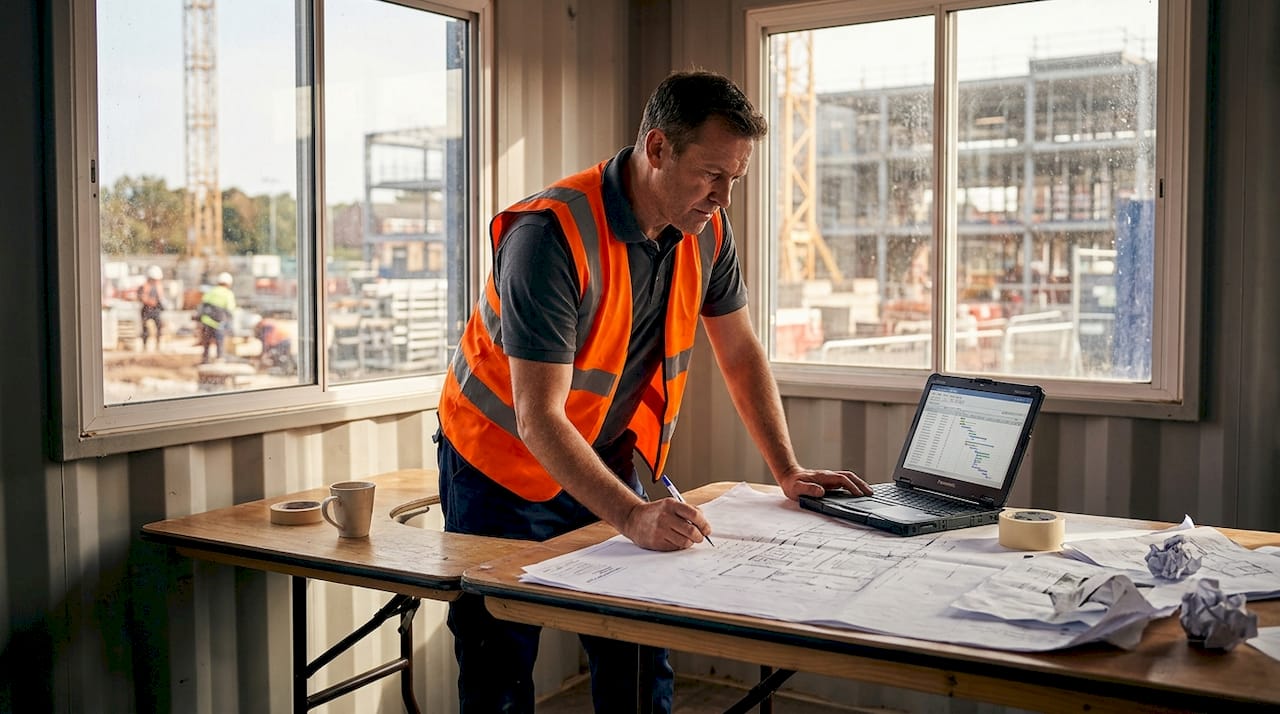 A purpose-built construction snagging software keeps these items tracked through to sign-off.
TL;DR:
- A project management platform is the operational backbone of construction projects, replacing fragmented communication methods with a centralised workspace. It offers essential features like task management, progress tracking, collaboration, resource planning, and reporting, tailored to site-specific needs. Successful adoption relies on leadership commitment, workflow fit, practical training, and integration with existing tools like WhatsApp to ensure effective team collaboration.
If you think a project management platform is just a fancier to-do list, you are missing most of the picture. For construction project managers and site team leaders across the UK, understanding what is a project management platform means recognising it as the operational backbone of a well-run project — the system that replaces scattered WhatsApp threads, email chains, and paper snag lists with one coordinated workspace. This guide breaks down what these platforms actually do, which features matter most on a construction site, and how to choose and adopt one that your team will genuinely use.
Table of Contents
- What is a project management platform?
- Key features of project management platforms for construction
- How project management platforms support construction workflows
- Choosing and adopting the right project management platform for your site team
- Why the platform is only part of the project management equation
- How BRCKS can help UK construction teams manage projects better
- Frequently asked questions
Key Takeaways
| Point | Details |
|---|---|
| Definition clarity | A project management platform centralises planning, tracking, and collaboration for construction projects. |
| Essential features | Effective platforms combine task management, progress tracking, communications, and reporting. |
| Workflow fit matters | Adoption depends on how well a platform matches the team’s existing work methods and usability. |
| People over tools | Successful project delivery depends on people using the platform effectively, not the platform alone. |
| WhatsApp integration | Tools like BRCKS that integrate with familiar apps improve site team communication and clarity. |
What is a project management platform?
A project management platform is, at its core, a digital system for managing projects by centralising tasks, schedules, and progress in one place. But that definition only scratches the surface. In practice, these platforms range from basic checklist tools at one end to full project lifecycle management systems at the other, handling everything from task assignment and document storage to client reporting and subcontractor coordination.
For construction, the real value lies in what happens when you stop managing complexity through memory and messaging apps. A project on a typical UK residential development might involve a principal contractor, six to ten subcontractors, a client, an architect, and a site manager juggling dozens of daily decisions. Without a platform, every decision, update, and issue lives in someone’s phone or inbox. Things fall through the gaps. The benefits of project communication platforms become especially clear when you consider the volume of information that needs to reach the right person at exactly the right time.
Here is what a project management platform typically brings together:
- Task management: Assign work to individuals or teams with clear deadlines
- Document and file storage: Keep drawings, contracts, and photos in one accessible location
- Progress tracking: Monitor milestones and completion status across all workstreams
- Communication tools: Replace fragmented messaging with structured, project-linked dialogue
- Client-facing visibility: Share progress updates without exposing your internal operations
- Reporting: Generate summaries of what has been done, what is overdue, and what is at risk
The shift from “we manage projects through WhatsApp and spreadsheets” to using a dedicated platform is not just a technology upgrade. It is a structural change in how your team shares information and makes decisions.
Key features of project management platforms for construction
Not all platforms offer the same depth of functionality, and not every feature matters equally on a construction site. Project management platforms combine task management, progress tracking, collaboration, resource management, and reporting into a single workspace to improve organisation and decision-making. What you need to look for are features that map directly onto the realities of site-based work.
Task management with assignments and deadlines is the non-negotiable starting point. Tasks should be assignable to specific people, with due dates and clear ownership. Without this, responsibility gets diffused and things simply do not get done.
Progress and milestone tracking gives you and your client a live view of where the project stands. Rather than chasing updates from subcontractors, you can see completion percentages and flag delays before they cascade.
Collaboration tools are where many construction teams experience the biggest difference. Centralising communication within the context of a task or project means less back-and-forth, fewer misunderstandings, and a full audit trail if anything is disputed later. This is especially valuable when managing subcontractors across multiple sites, as explored in more detail in our article on construction project management software benefits.
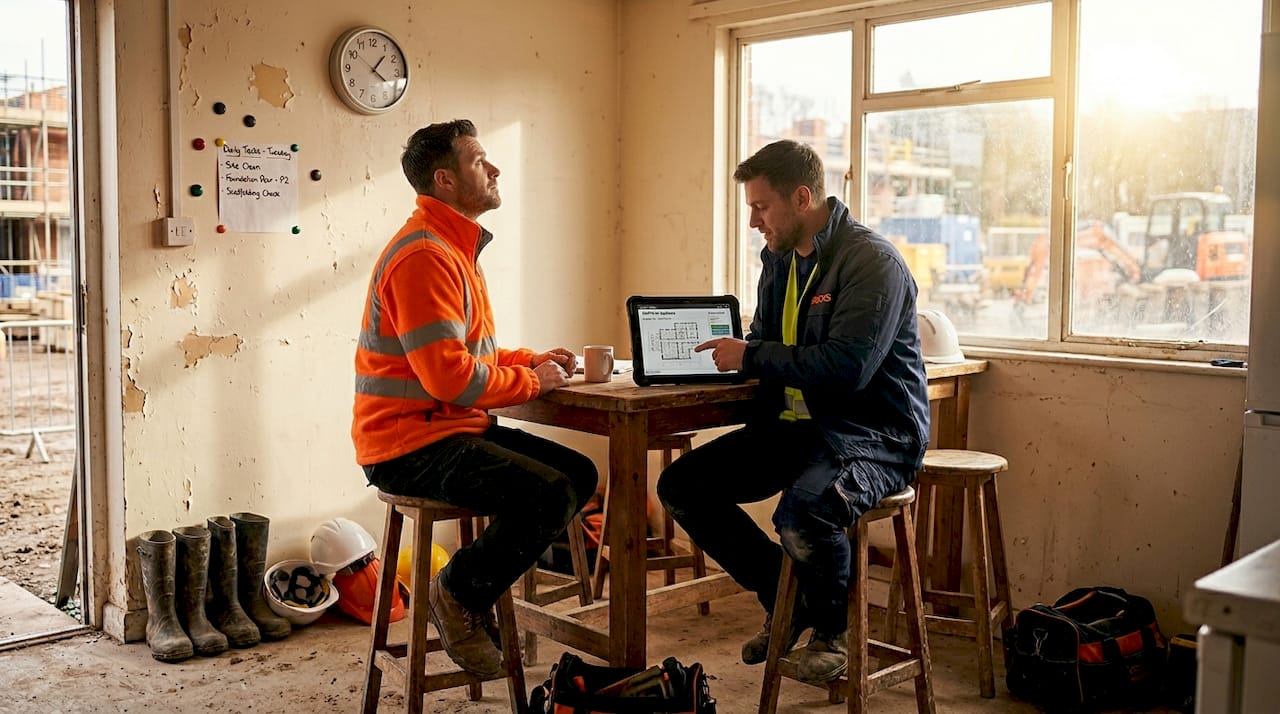
Resource planning helps you see who is allocated where and spot overloading before it becomes a problem. On a fast-moving construction programme, this kind of visibility is the difference between a controlled schedule and a reactive scramble.
Reporting and analytics allow you to make decisions based on data rather than gut feel. How many snag items remain open? Which subcontractor consistently misses deadlines? Which phase of the project is running over budget? Good platforms answer these questions without requiring manual data compilation.
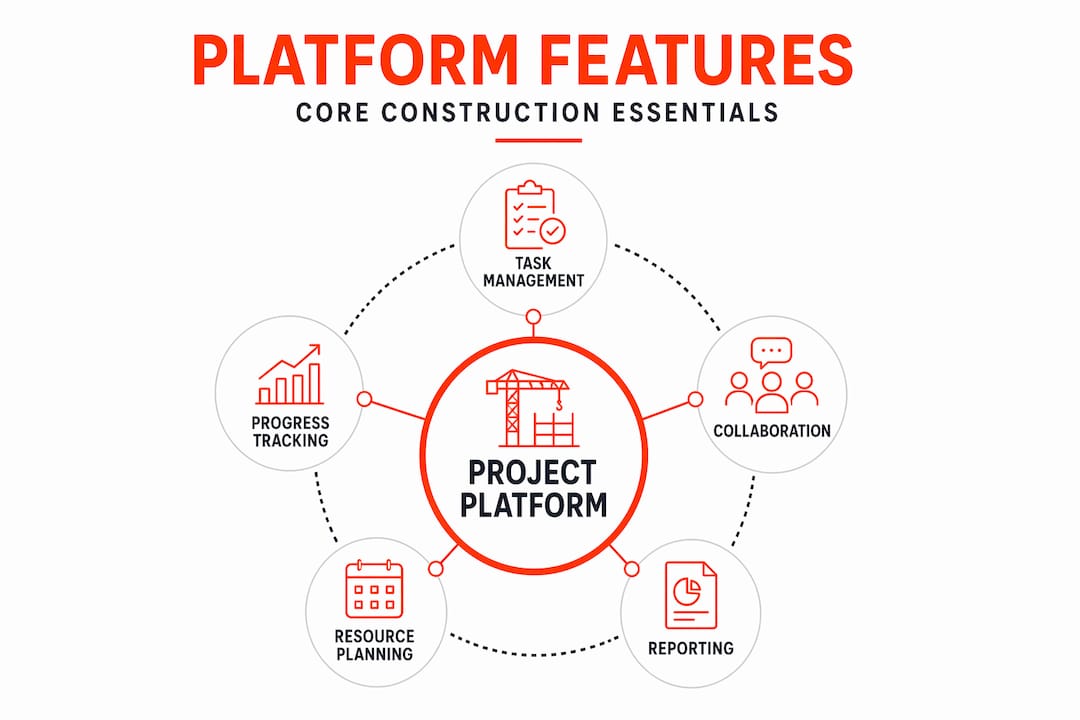
The digital adoption curve in UK construction has accelerated significantly, and teams that use these features well are genuinely outperforming those that do not.
Pro Tip: Before rolling out any platform to your full site team, test it with two or three people in varied roles — a site manager, a trades operative, and a subcontractor. The usability gaps they find will save you a much larger headache later.
How project management platforms support construction workflows
Features are only valuable if they actually fit how your team works. This is where many platforms fall short for construction teams specifically. Generic tools built for office-based software teams do not always account for the realities of site work: patchy connectivity, teams who prefer messaging apps, and people whose primary device is a mobile phone held in a muddy glove.
Platforms that offer real-time visibility, automation, and integrations with tools teams already use help construction managers standardise processes and maintain control without adding friction. The key word there is integration. If your site team lives in WhatsApp, a platform that works alongside that habit rather than fighting it will always get better adoption.
Here is a direct comparison of what managing a construction project looks like with and without a platform:
| Activity | Manual approach | Platform-based approach |
|---|---|---|
| Task updates | Verbal or WhatsApp messages, easily lost | Logged against the task, visible to all stakeholders |
| Collaboration | Multiple threads across email, calls, and texts | Single project-linked conversation with full history |
| Progress visibility | Weekly meeting or site visit to assess | Live dashboard updated as work is completed |
| Issue reporting | Reported verbally, noted on paper | Logged with photos, assigned, tracked to resolution |
| Client communication | Ad hoc calls and email chains | Structured updates via client portal |
| Subcontractor management | Phone calls and forwarded messages | Assigned tasks with deadline tracking |
The workflow benefits for site-based teams are substantial:
- Fewer missed instructions because tasks are written down and assigned
- Faster issue resolution because problems are logged and tracked, not forgotten
- Reduced duplication because everyone works from the same information source
- Better accountability because every completed or overdue item has a name attached to it
- Cleaner handover documentation because the project record builds itself as you work
Many teams are also surprised to find that a good platform reduces the length and frequency of site meetings, because status updates are already visible. Explore the common reasons digital construction collaboration fails and you will see that workflow mismatch is near the top of the list.
Choosing and adopting the right project management platform for your site team
Understanding what a platform does is one thing. Choosing the right one for your team and actually getting your people to use it is another challenge entirely. Platform adoption depends heavily on workflow fit and usability, which is why piloting with a small group before full rollout is consistently recommended by implementation specialists.
Here is a practical process for evaluating and rolling out a new platform:
- Define your core needs. Write down the three to five biggest communication and coordination problems your team faces today. Use this list as your evaluation filter, not the platform’s marketing page.
- Check usability on a mobile device. Most of your site team will access the platform from a phone. If it is slow, clunky, or requires too many taps to log a task update, it will be abandoned.
- Assess integration with your existing tools. Does it connect with the communication methods your team already uses? Friction at the interface point is where adoption dies.
- Run a structured pilot. Choose two to four weeks and a single active project. Include a site manager, at least one subcontractor, and one client contact. Document what works and what causes confusion.
- Review and adapt before scaling. Use the pilot feedback to adjust your setup, naming conventions, and workflow templates before inviting the whole team.
- Train with real tasks, not demos. The most effective training puts people in front of actual project tasks from day one. Walkthroughs of hypothetical scenarios are quickly forgotten.
The financial case is also worth making explicit. A structured review of construction project management costs consistently shows that communication failures, rework, and missed deadlines are among the largest controllable costs in any build programme.
Pro Tip: Include a subcontractor in your pilot group. They are often the most resistant to change and the most influential in how new tools spread through your supply chain. If you win them over early, adoption across the wider team follows naturally.
Why the platform is only part of the project management equation
Here is something the software industry rarely tells you: the best platform in the world does not fix a team with poor communication habits. As one often-cited principle in project delivery puts it, “the platform is the tool” that helps people work together effectively. The project is still delivered by people.
In our experience working with construction teams, the projects that gain the most from a platform are not necessarily those with the most technically impressive setup. They are the ones where a project manager or site lead actively models the behaviour they want to see. When the person in charge logs tasks, updates progress, and communicates through the platform, the rest of the team follows. When they continue using WhatsApp for every decision and treat the platform as a reporting exercise, adoption collapses.
This is especially true in UK construction, where team culture tends to be practical and sceptical of overhead. If people feel the platform creates more work than it saves, they will route around it. The answer is not to force compliance but to design the platform setup around the workflows your team already values, and to remove as much friction from the daily experience as possible.
The uncomfortable reality is that choosing the right platform is perhaps the third most important decision in the adoption journey. First comes leadership commitment. Second comes a setup that genuinely fits your workflow. The platform choice comes after both of those. Understanding why digital construction collaboration fails is often less about the technology and more about the conditions in which that technology was introduced.
How BRCKS can help UK construction teams manage projects better
If you are a UK construction project manager looking for a platform that fits the way your team actually works, BRCKS is built specifically for that.
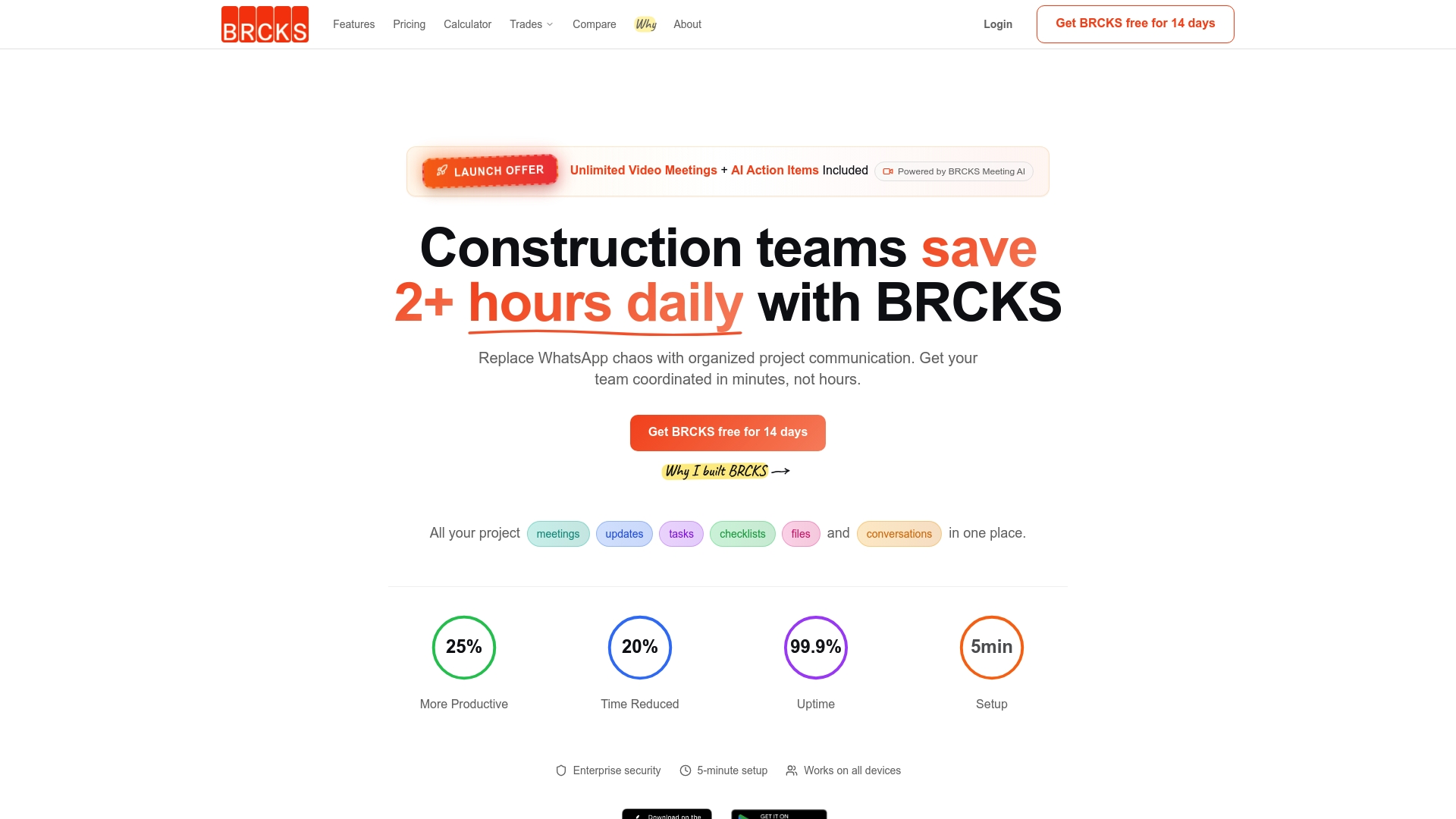
BRCKS integrates directly with WhatsApp, meaning your site team can receive and respond to updates without being forced into an unfamiliar interface. Tasks, checklists, file sharing, and team chat all sit within one platform, alongside client portals that give your clients visibility without exposing your internal communications. Automation handles routine update notifications, saving teams over two hours daily on manual follow-up. Whether you manage a small team of builders or a multi-site operation, BRCKS scales to fit. For teams tired of fragmented messaging and lost instructions, construction communication software that meets people where they already are is a practical starting point. You can keep your team in WhatsApp and still gain the structure and visibility a professional project demands. Try BRCKS free for 14 days and see the difference for yourself.
Frequently asked questions
What key features should a project management platform have for construction sites?
Essential features include task management, progress tracking, collaboration tools, resource planning, and reporting tailored to construction workflows. Project management platforms combine these capabilities into one platform to support better organisation and faster decisions on site.
How can construction teams ensure successful adoption of a new project management platform?
Piloting with a small group, ensuring workflow fit, and providing practical training using real tasks are the most effective steps. Testing with a small group to identify friction before a full rollout is widely recommended and consistently reduces resistance.
Why is real-time progress tracking important in construction project management?
It allows teams to spot delays early, adjust schedules, and keep projects on time and within budget. The best project management tools detect problems before they escalate through detailed task-level tracking.
Can project management platforms work with tools teams already use on site?
Yes, many platforms connect with the communication tools and apps your team already relies on day to day. For example, Asana connects with enterprise tools an organisation already uses, and purpose-built construction platforms like BRCKS integrate directly with WhatsApp to reduce the friction of switching tools entirely.
Recommended
- UK Construction Project Management Terminology Guide | BRCKS
- BRCKS | Construction Project Communication Software
- BRCKS | Construction Project Communication Software
- How a project feed transforms construction communication | BRCKS
How BRCKS Can Help
Adopting the right project management platform is no longer a luxury but a necessity for UK firms looking to stay competitive and compliant in an evolving industry. BRCKS simplifies this transition by providing a centralised hub that bridges the gap between site teams and the office, ensuring every detail of your build is tracked with precision. By streamlining your workflows and improving real-time visibility, our software empowers you to focus on delivering quality projects rather than managing paperwork. We invite you to discover how BRCKS can transform your operational efficiency by exploring our features today. Learn more at BRCKS and explore our full feature set.